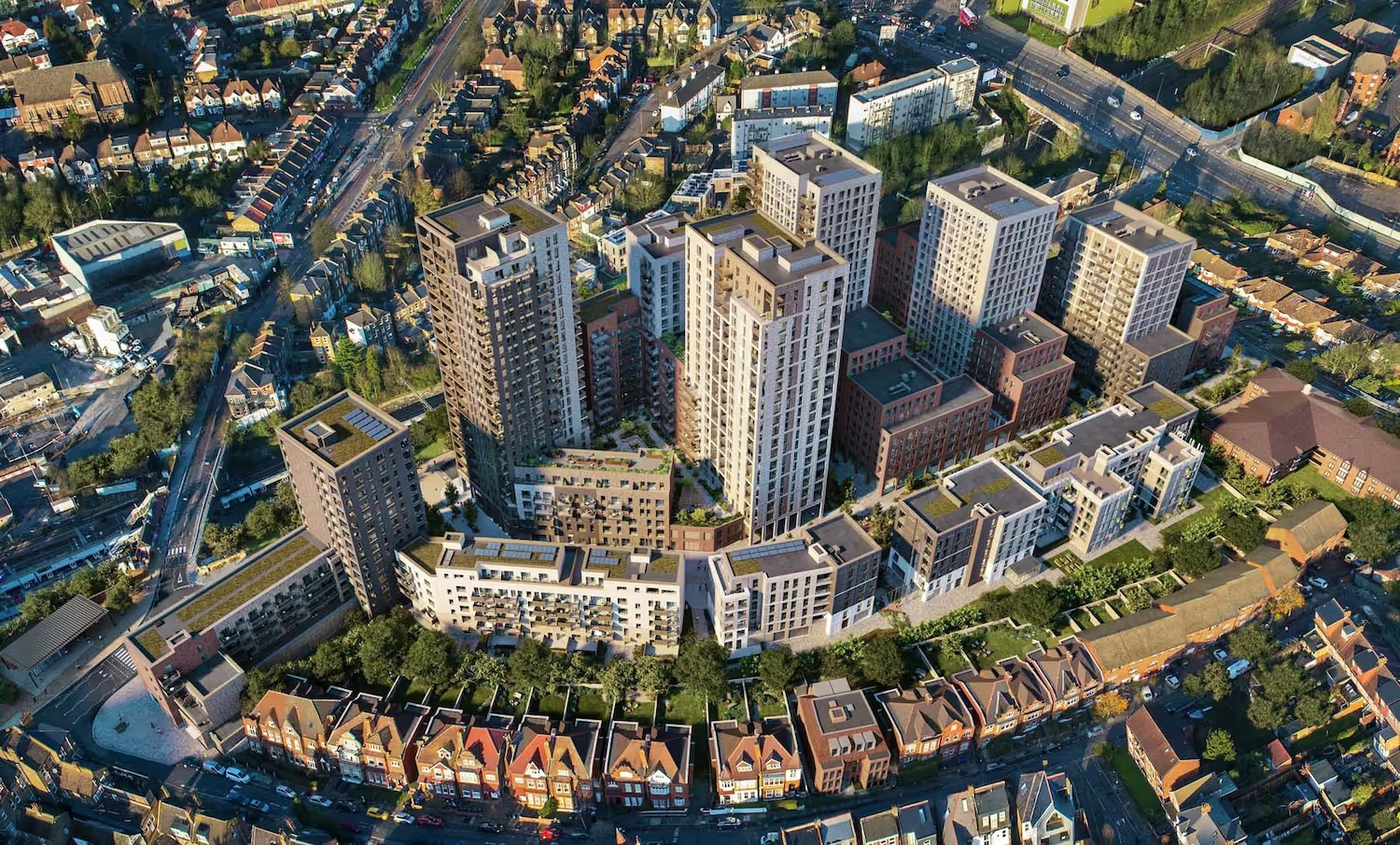
A letter has arrived. It tells you that a development near your property has been granted planning permission, that the new building will reduce the light reaching your windows, and that you may be entitled to compensation in the thousands or tens of thousands of pounds. There is a phone number. There is a friendly sign-off. There is a vague promise that the whole thing will cost you nothing.
Your first instinct, almost certainly, is to wonder whether this is real.
It is. Rights of light claims are one of the most established areas of English property law, and on substantial developments they routinely settle for meaningful five and six-figure sums. The letter in your hand is the start of a process that, if it is run properly, can result in a real cheque from the developer. If it is run badly, it can result in you signing your rights away for a fraction of what they were worth.
Which of those two outcomes you end up with is decided in the next few days. So before you do anything else, read this.
Your right to light is real, and it is valuable
Your right to light is a private legal easement. It runs with your building, not with you personally. It is acquired automatically once a window has enjoyed light for twenty years or more, which means almost every established property in the country has them, and most owners have no idea.
When a developer puts up a building that significantly reduces the light to those windows, they owe you compensation. In some cases a court can order them to take part of the offending building down, although that is rare in practice and most matters resolve in money. The figures involved on substantial developments are not small. Daylight matters legally and financially, and the law is unusually generous to the affected owner once the right has been established.
That is why you are receiving letters. Public planning data tells anyone who looks where the substantial new developments are, and which neighbouring buildings are likely to lose light. The letter on your desk is the result of someone running that analysis and writing to you because, on paper, you are a candidate.
That does not mean you definitely have a claim. It means you might. The next step is to find out properly.
The mistake that costs people most of their settlement
Here is the thing almost no one outside the industry knows.
The size of your settlement is not decided by how much light you lose. It is decided by what the developer believes you can force them to pay if they refuse.
Two property owners with effectively identical claims, on the same side of the same building, looking at the same development, can walk away with cheques that differ by an order of magnitude. The difference is not the technical analysis. The difference is what sits behind the analysis. The legal team. The funding. The willingness and ability to actually go the distance if the developer plays hardball.
Developers do not pay out of goodwill. They pay because their solicitor has read your file and concluded that you are credible, funded, and prepared to push the matter to a credible threat of injunction. A claim that does not look like that to the developer's solicitor gets a low offer to make the problem go away. A claim that does look like that gets paid properly, and a recent High Court ruling in central London has reinforced exactly how substantial those numbers can be, even on completed developments.
This is the single most important thing to understand before you choose who runs your claim. The letter is the easy part. What sits behind it is what determines the number.
The one question to ask before you sign
When consulting a right of light surveyor, or any firm offering to handle the claim, ask this:
If the claim does not succeed, am I exposed to the developer's costs, or do you carry that risk through insurance?
The answer separates a marketing operation from a funded litigation team in a single sentence.
A genuine fully funded claim covers everything. Your surveyor. Your property litigation solicitor. Counsel where required. Court fees if it goes that far. And, crucially, legal insurance that protects you from paying the developer's costs if the matter is lost. You sign nothing, pay nothing, and risk nothing. If the claim succeeds, the firm is paid out of the settlement. If it doesn't, you walk away.
If the answer to that question is anything other than a clear yes to insurance and yes to end-to-end funding, you are looking at a contingency fee with the downside still sitting on your shoulders. That is not the same arrangement, and it is not the arrangement that gets developers to pay properly.
The terminology check
One last thing, and this takes about ten seconds.
Look at the letter. Does it talk about rights of light, or does it talk about "loss of daylight" or "daylight and sunlight"?
Rights of light is the legal easement. It is assessed using Waldram analysis, the 0.2% sky factor test, and the 50/50 rule. It is the basis on which compensation is paid.
"Loss of daylight" and "daylight and sunlight" refer to a completely separate planning-side assessment with different metrics, used for planning applications, not legal claims. If the letter conflates the two, the sender does not understand the legal basis of what they are selling. That tells you what kind of leverage they will bring when the developer's solicitor opens the file.
What to do now
Three things, in order.
Keep the letter. Note the date. The clock matters in rights of light, particularly if the developer has served, or is about to serve, a Light Obstruction Notice.
Do not sign anything in the next few days. The friendly mobile number and the urgency in the letter are marketing. There is time to take a second view, and any firm telling you otherwise is telling you something about themselves.
Get the letter looked at properly. Send it to us. We will tell you, at no cost and with no obligation, whether you have a claim worth pursuing, what it is likely to be worth, and what is actually involved in running it. If you do, we will run it for you on a fully funded, fully insured basis. You sign nothing, pay nothing, and risk nothing. If you do not, we will tell you that too.
The letter on your desk might be the start of a meaningful financial recovery. Make sure it gets read by someone who can tell you what it is actually worth, before you let someone else decide that for you.
Joshua Platt BSc (Hons) MRICS
Director, Daylight Protect
Daylight Protect runs rights of light claims for property owners across England and Wales on a fully funded, no-win-no-fee basis. Our panel solicitors are Legal 500 ranked and specialist property litigation firms and our legal insurance covers the developer's costs in the event a claim does not succeed. Send us the letter you have received and we will give you an honest second view at no cost.
Similar insights