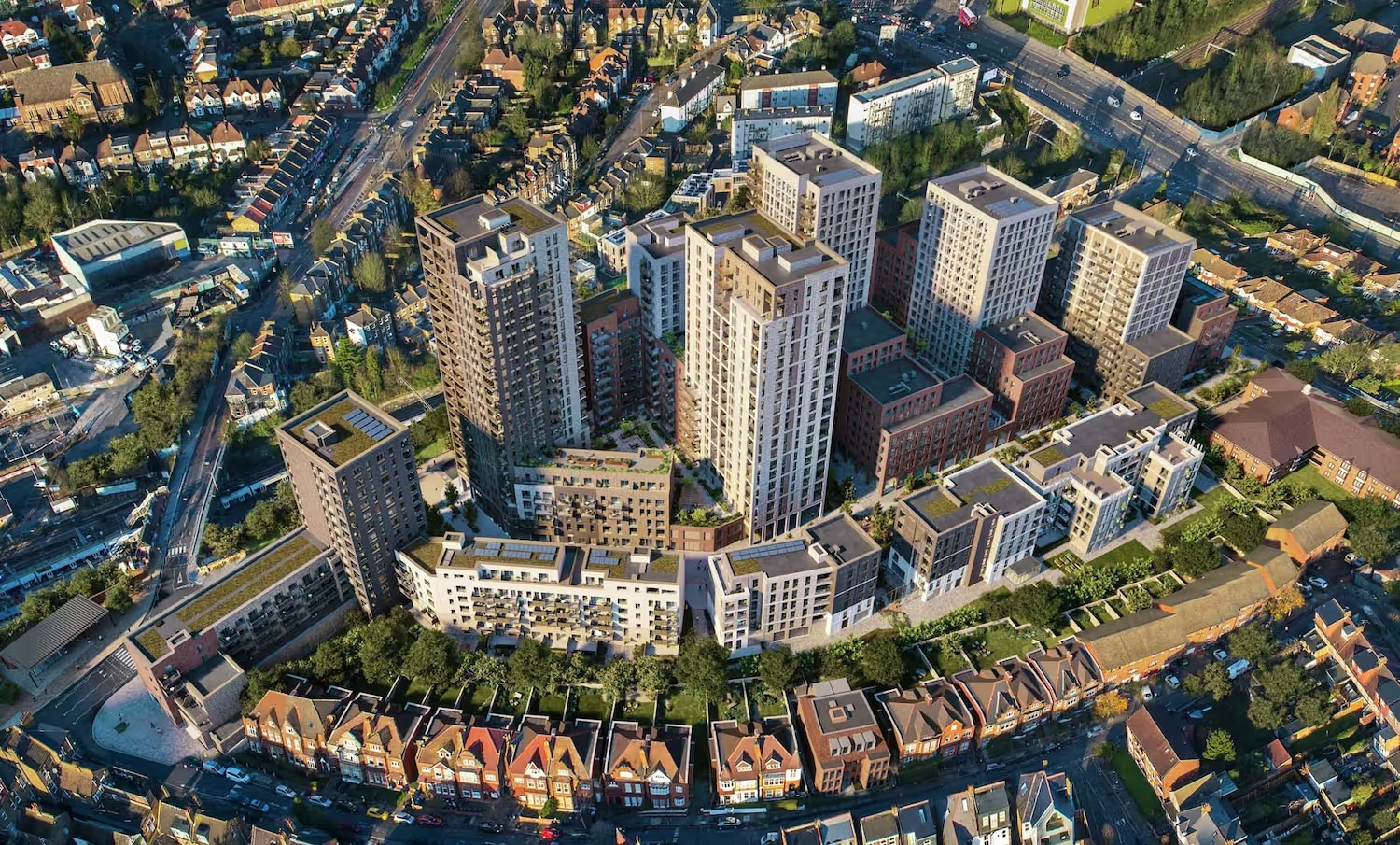
Why are Schroders Begg contacting me?
Schroeders Begg has contacted you about a development and your right to light. What their involvement signals, and how to respond without losing leverage.
Schroeders Begg has no connection with Daylight Protect. This is independent information for property owners who have received correspondence from them. All statements about the firm are drawn from its own published material and were checked on 11 June 2026.
Schroeders Begg is a boutique practice with courtroom pedigree. The firm states it has acted for the winning side in three landmark rights of light cases, two of which reached the Court of Appeal, so a letter from them means the developer has hired specialists who know exactly what these claims are worth when properly fought.
- The firm is small, specialist and RICS-regulated, acting for developers and affected owners alike. On this scheme, it acts for the developer.
- Its litigation track record cuts both ways: the developer is taking your rights seriously, and their advisers know precisely how claims succeed, and how unadvised neighbours come to settle cheaply.
- Time matters more than the letter suggests. Get an independent assessment promptly. Check your claim free of charge.
Who are Schroeders Begg?
Schroeders Begg is a London-based practice of chartered building surveyors (Vox Studios, SE11), regulated by RICS and specialising in rights of light, daylight and sunlight, party wall and neighbourly matters. Its partners lead on rights of light work, and the firm advises a broad client base of developers, local authorities, financial institutions and private individuals, with particular standing in contested matters: by its own account it has acted for the winning parties in three landmark rights of light court cases, including two that reached the Court of Appeal. That makes it one of the more litigation-seasoned practices a developer can instruct.
What does it mean that the developer instructed a specialist like this?
Read it as a signal about the scheme, not a threat to you. Developers instruct firms with genuine dispute experience when the rights of light picture is material to the project: when redesign would be expensive, when insurers want the exposure managed, or when neighbouring claims could realistically hold the scheme up. The encouraging inference for you: your claim is being treated as real. The cautionary one: the people across the table have seen how these disputes end in court, and they will calibrate every offer to whether they believe you can get there.
What kind of letter have I received?
The standard taxonomy applies. An access request, so the developer's analysis rests on measurements of your actual windows: handle on advice, don't refuse reflexively, since the conduct of both parties is weighed if litigation follows. A notification and offer, which is the developer's opening number. A deed of release for signature, the permanent surrender of a right your property has likely been accruing for 20 years or more under the Prescription Act 1832, binding on you and every future owner. Or correspondence concerning a light obstruction notice under the Rights of Light Act 1959, the one variant with a statutory clock, and the one to act on fastest.
Why does timing matter so much?
Because your leverage is strongest before concrete is poured. Courts deciding between an injunction and damages weigh, among other things, how promptly a claimant asserted their rights, and delay while a building rises is repeatedly held against neighbours who waited. The developer's team understands this dynamic intimately, which is why early letters often feel unhurried: every quiet month that passes shifts the balance their way at no cost to them. You don't need to respond substantively today. You do need to know where you stand today.
What should I do before signing anything?
Acknowledge receipt if a reply is requested. Commit to nothing about your property's history, your intentions, or any figure. Sign nothing, least of all an enclosed deed of release, however reasonable the sum appears, because no enclosed figure was set with the benefit of independent advice on your side. Then have your claim assessed by people whose fees are not paid by the developer. Your options for doing that, compared honestly: claims company vs your own surveyor vs solicitor.
How can Daylight Protect help?
The Daylight Protect Claim Plan handles your whole claim on a no win, no fee basis. Specialist solicitors act for you, and insurance included in the plan pays the expert bills, the court fees and the other side's costs if the claim fails. Our fee is a percentage of your compensation, paid only when you win. Everything is set out in writing before you start, and if your claim is unsuccessful you pay nothing. The developer instructed advisers who know what these cases look like at the Court of Appeal. This structure is what ensures your side of the table carries the same weight.
Find out what your claim is worth →
Daylight Protect is a litigation facilitator, not a firm of solicitors. We arrange and manage rights of light claims on a no win, no fee basis; legal work is carried out by independent specialist solicitors who act for you. Our fee is payable only if your claim succeeds.
Frequently asked questions
Is the letter from Schroeders Begg genuine?
Yes. The firm is an established, RICS-regulated specialist practice. Its letter is a normal professional step in managing the developer's rights of light exposure.
Does their court experience mean I can't win?
No. It means the opposite is being managed. Developers retain experienced firms because neighbour claims succeed often enough, and cost enough, to be worth managing carefully. Properly advised and properly backed, your claim is exactly the kind of risk that experience exists to settle.
The works haven't started yet. Should I wait and see how bad it is?
Waiting is the most expensive thing you can do. Your strongest position is before and during early works, when an injunction remains a live remedy. Assess now; decide with full information.
This article is general information about rights of light in England and Wales, not legal advice on your specific circumstances.