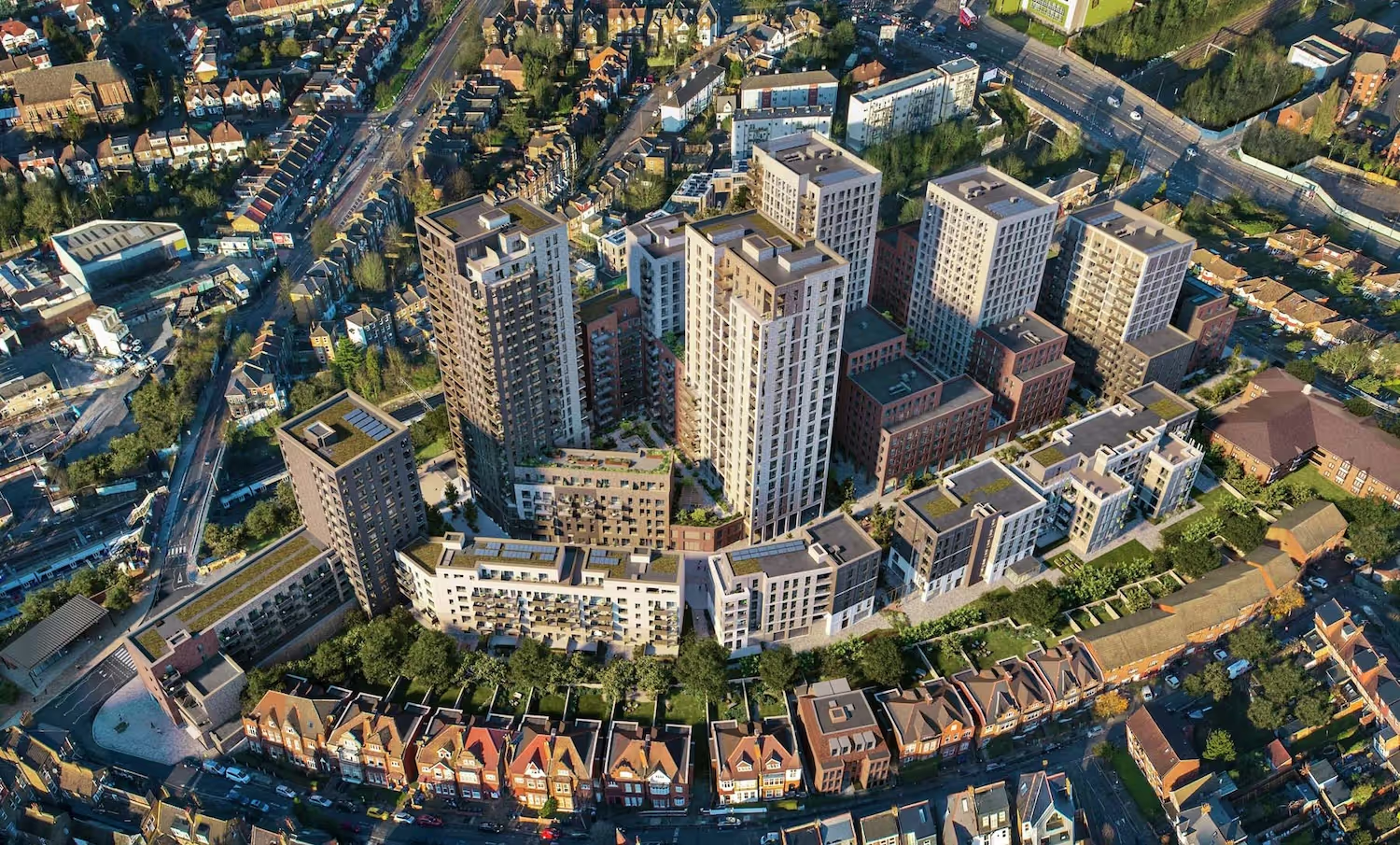
Why have I received a rights of light letter?
Had a letter from a developer's surveyor or solicitor about your right to light? What it means, what a deed of release costs you, and your options.
A letter about your right to light almost always means one thing: a nearby development is expected to reduce the natural light reaching your property, and the developer wants to deal with your legal rights quickly, quietly and usually cheaply, before building work makes the question urgent.
- The letter is genuine, but the sender acts for the developer. Their job is to remove your claim from the developer's risk register at the lowest workable cost.
- Do not sign anything enclosed with the letter. A deed of release permanently extinguishes your right to light, binds future owners of your home, and removes your negotiating leverage forever.
- You do not have to respond alone, and you do not have to pay to find out what your claim is worth. It costs nothing to check whether your property qualifies.
Why have I received a rights of light letter?
Before a developer builds anything substantial in a built-up area, their professional team assesses which neighbouring properties hold rights of light that the scheme would infringe. A right to light is a legal easement, most commonly acquired once a window has enjoyed light for 20 years or more under the Prescription Act 1832. If the development would cut your light below the level the law protects, you may be entitled to compensation, or in some cases to an injunction stopping or cutting back the scheme.
That injunction risk is why you received the letter. Developers and their insurers cannot price an unresolved rights of light claim, so they try to resolve it early. Crucially, planning permission does not override your right to light: it is a private property right, decided between you and the developer, not by the council.
Who sent the letter, and who do they act for?
Most letters come from one of two senders. The first is a specialist rights of light surveying practice instructed by the developer, such as Anstey Horne, GIA, Point 2 Surveyors, Delva Patman Redler, Schroeders Begg, eb7, Hollis, The Chancery Group or Proximity. These are established, professionally regulated firms, and nothing about their letter is improper. But on this scheme they are paid by the developer, and their client's interests are not yours.
The second is the developer's solicitor, whose letter signals that the developer has a legal budget behind the scheme and is formalising its position.
If your letter is from a claims company offering to act for you on a no win, no fee basis, different questions apply. See how to choose a rights of light claims company, or read our guide to a letter from The Natural Light Company.
What are the four types of rights of light letter?
1. An access or survey request. The surveyor asks to inspect your property or measure your windows so the developer can model the light loss. Refusing outright is rarely wise, because the conduct of both sides matters if a dispute later reaches court, but you are entitled to take advice first and agree access on sensible terms.
2. A notification with an offer. The letter tells you the development will affect your light and offers a sum to release your rights. These first offers are an opening position, calibrated to the developer's budget rather than to the value of your leverage.
3. A deed of release, enclosed and ready to sign. This is the document the whole exercise exists to obtain. More on this below.
4. Notice of a light obstruction notice (LON). Under the Rights of Light Act 1959, a developer can register a notional obstruction as a local land charge. If you take no action while it stands, it can interrupt or defeat rights that are still being acquired by prescription. A LON letter has a clock attached, so take advice promptly.
What is a deed of release, and why does signing it matter?
A deed of release is a permanent legal surrender of your right to light in exchange for a payment. Once signed, it cannot be undone. It typically binds not just you but every future owner of your property, and it removes the one thing that gives a neighbour real power in these disputes: the credible threat of an injunction. Developers seek signatures early precisely because an unsigned neighbour is an unpriced risk. Whatever figure is enclosed, it was reached before you had any independent advice on what your position is worth, and a release signed in a hurry is worth exactly what the developer hoped it would be.
Should I respond, or ignore the letter?
Neither extreme serves you. Ignoring correspondence entirely can count against you later, because courts weigh the reasonableness of both parties' conduct, and silence does nothing to stop a LON taking effect or works progressing. Responding instantly, or signing what was enclosed, hands away your position. The sensible middle course: acknowledge receipt if a reply is requested, commit to nothing, sign nothing, and get an independent assessment of your claim before any substantive response.
What are my options?
You can negotiate alone, instruct your own surveyor at hourly rates, instruct a solicitor (possibly on their own no win, no fee terms) or use a no win, no fee claims plan that puts the professional team and the costs risk on contingent terms. Each option distributes cost, risk and leverage differently; we compare them honestly in claims company vs your own surveyor vs solicitor. The single most important question to ask of any route is this: if the developer refuses to settle, can you credibly fund the litigation that follows? If the answer is no, the developer's team will price your claim accordingly.
How can Daylight Protect help?
The Daylight Protect Claim Plan handles your whole claim on a no win, no fee basis. Specialist solicitors act for you, and insurance included in the plan pays the expert bills, the court fees and the other side's costs if the claim fails. Our fee is a percentage of your compensation, paid only when you win. Everything is set out in writing before you start, and if your claim is unsuccessful you pay nothing. Because the developer's team can see the claim is equipped to go all the way to court if necessary, the threat they have to price is real. Daylight Protect has recovered more than £15,000,000 in compensation for hundreds of property owners.
Check your claim: it takes two minutes and costs nothing →
Daylight Protect is a litigation facilitator, not a firm of solicitors. We arrange and manage rights of light claims on a no win, no fee basis; legal work is carried out by independent specialist solicitors who act for you. Our fee is payable only if your claim succeeds.
Frequently asked questions
Is the letter a scam?
Almost certainly not. The surveying practices and law firms that send these letters are established, regulated businesses. The question is not whether the letter is genuine. It is whether the arrangement it proposes reflects what your rights are actually worth.
Does planning permission mean I've already lost?
No. Planning permission and private rights of light are entirely separate. A consented, even completed, building can still infringe your right to light, and courts have ordered developers to pay substantial sums, and in some cases to cut back completed buildings.
How long do I have to act?
It depends on the letter. A LON notice carries statutory time pressure; for other letters, your leverage tends to weaken as construction advances, because courts weigh delay when deciding between an injunction and damages. Earlier is always stronger.
Will making a claim cost me anything?
Not if it is unsuccessful. Under the Daylight Protect Claim Plan, solicitors act for you no win, no fee, insurance included in the plan pays the bills and the other side's costs if you lose, and our fee only ever comes out of a successful settlement, all confirmed in writing before anything starts.
This article is general information about rights of light in England and Wales, not legal advice on your specific circumstances.