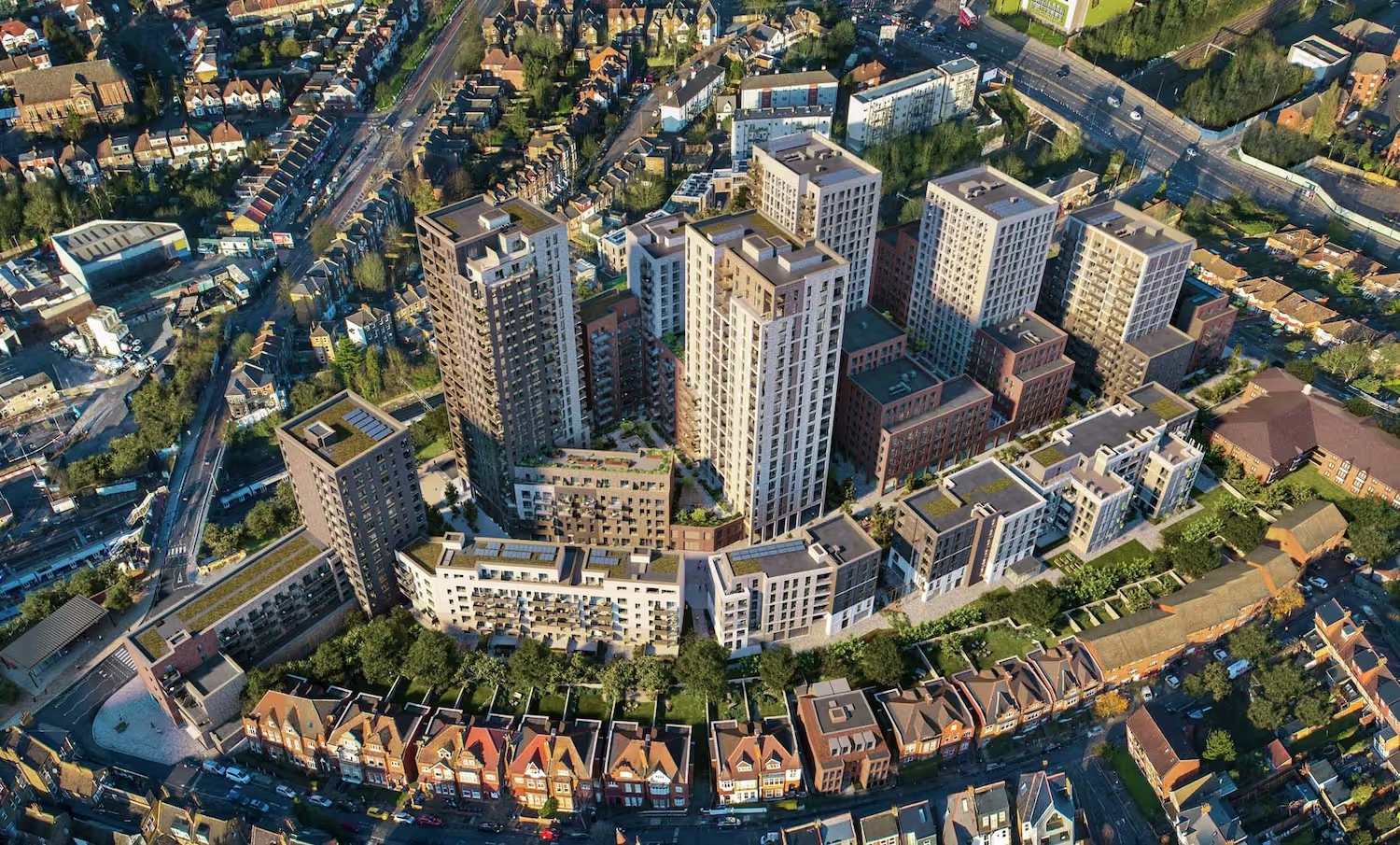
Why are Anstey Horne writing to me?
Anstey Horne has written to you about a nearby development and your right to light. What the letter means, who they act for, and what to do next.
Anstey Horne has no connection with Daylight Protect. This is independent information for property owners who have received correspondence from them. All statements about the firm are drawn from its own published material and were checked on 11 June 2026.
If Anstey Horne has written to you about rights of light, a developer has instructed one of the UK's largest specialist light surveying practices to manage the legal risk your property poses to their scheme. That tells you the developer takes the risk seriously, and so should you.
- Anstey Horne is a long-established, reputable practice. On this scheme, however, it is engaged by the developer, and its role is to resolve your claim within the developer's budget.
- The firm's own published guidance to developers recommends engaging affected neighbours early with a settlement plan. The letter in your hand is that strategy in operation.
- Sign nothing and agree no figure until you have an independent view of what your claim is worth. Check your claim free of charge.
Who are Anstey Horne?
Anstey Horne is a firm of chartered surveyors with a history stretching back more than 230 years and one of the largest specialist rights of light teams in the country, operating from offices including London, Birmingham, Bristol, Cardiff, Leeds, Manchester, Norwich and Plymouth. The firm advises on the full range of light matters, including rights of light assessments, daylight and sunlight for planning, and light obstruction notices, and acts for developers, property owners and legal teams across the UK. Receiving their letter is not a cause for alarm in itself: it is a normal, professional step in how substantial developments are delivered.
Why are Anstey Horne writing to me?
Because the developer's light model says your property matters. On schemes of any size, the developer's surveyors identify which neighbouring windows hold rights of light the new building would infringe, and then approach those owners. Anstey Horne's own published material explains the logic plainly: affected neighbours are often willing to accept financial compensation in exchange for their loss of light, which lets the developer proceed without redesigning the scheme. In other words, a letter from them generally means the developer would rather pay you than change the building. The open question is how much.
What is the letter actually asking for?
Read it carefully against three possibilities. It may request access so their surveyors can measure your windows and model the loss. That is a routine step you should manage on advice rather than refuse outright, since the conduct of both sides is weighed if a dispute ever reaches court. It may notify you of the scheme and invite discussion or make an offer, which is an opening position set by the developer's budget. Or it may enclose a deed of release for signature: the document that permanently extinguishes your right, binds future owners of your property, and ends your leverage the moment you sign. Larger schemes often involve letters to many neighbours at once; the developer's interest is in collecting signatures before anyone obtains independent advice.
What if the letter mentions a light obstruction notice?
Anstey Horne advises developers on light obstruction notices (LONs) under the Rights of Light Act 1959, a procedure that registers a notional obstruction against your property. If a LON is referenced anywhere in your letter, do not file it away: left unchallenged, a LON can defeat rights that are still accruing under the Prescription Act 1832. Take advice promptly, because this is the one letter type with a statutory clock attached.
What should I do before responding?
Acknowledge the letter if a reply is requested, but commit to nothing in substance. Do not confirm or deny how long your windows have enjoyed light, do not name a figure, and do not sign or return any enclosed document. Then get an independent assessment of your position: what rights your property holds, what the scheme would take, and what that is worth when the developer knows you can afford to enforce it. That last point is the one a polite exchange of letters never tests. A neighbour with no means of funding proceedings is, from the developer's side of the table, a discount waiting to be taken.
How can Daylight Protect help?
The Daylight Protect Claim Plan handles your whole claim on a no win, no fee basis. Specialist solicitors act for you, and insurance included in the plan pays the expert bills, the court fees and the other side's costs if the claim fails. Our fee is a percentage of your compensation, paid only when you win. Everything is set out in writing before you start, and if your claim is unsuccessful you pay nothing. That structure is what changes the conversation with the developer's team: the claim they are pricing is one that can go the distance.
Find out what your claim is worth →
Daylight Protect is a litigation facilitator, not a firm of solicitors. We arrange and manage rights of light claims on a no win, no fee basis; legal work is carried out by independent specialist solicitors who act for you. Our fee is payable only if your claim succeeds.
Frequently asked questions
Is a letter from Anstey Horne genuine?
Yes. Anstey Horne is an established chartered surveying practice. Treat the letter as genuine, and treat its contents as the developer's opening position rather than a neutral valuation of your rights.
Do I have to give their surveyor access to my home?
You are not obliged to, but blanket refusal can count against you later. The better course is to take advice first, then permit access on agreed, sensible terms.
The letter says the scheme has planning permission. Doesn't that settle it?
No. Planning permission does not override private rights of light. Your claim exists independently of the planning process and is resolved between you and the developer, by agreement or by the courts.
This article is general information about rights of light in England and Wales, not legal advice on your specific circumstances.