Get a Right of Light Assessment
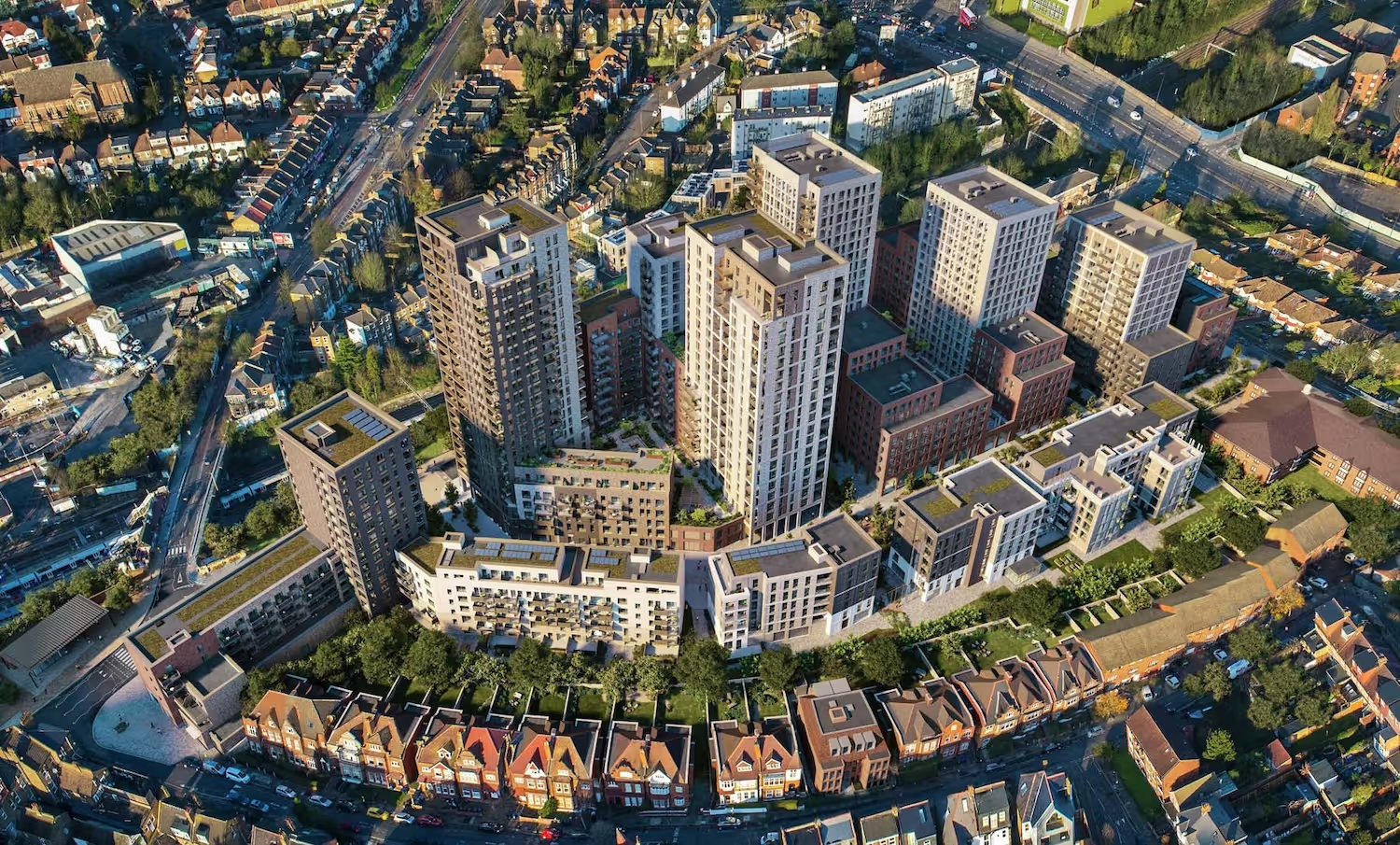
A professional Right of Light Assessment can tell you how much your daylight is being impacted if you have a new development built near your home.
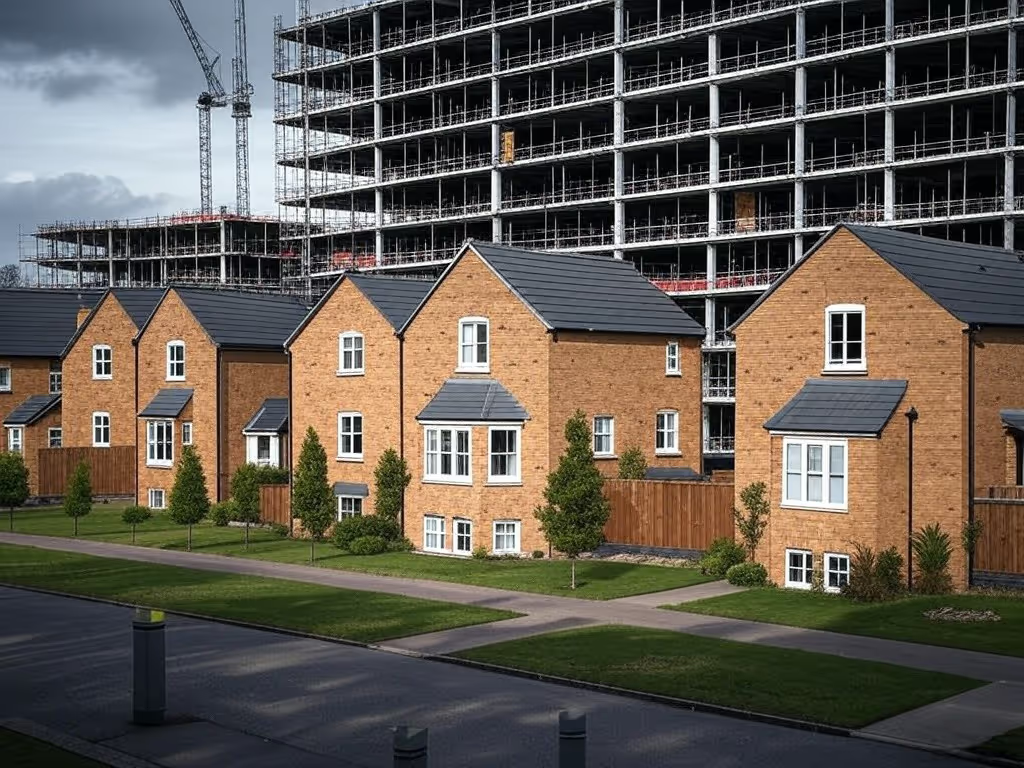
If you have a new development being built near your home, or an existing development is becoming overcrowded and impacting the daylight entering your property, you could be eligible for right of light compensation.
A professional right of light assessment can help establish whether you have legally lost light and can make a claim against the developer.
If you are genuinely affected, you may be able to claim compensation because you have lost some of your legal "right to light."
At Daylight Protect, we combine specialist daylight assessments with legal support to help homeowners understand their rights and take action where a development is interfering with their natural light.
We work with you every step of the way. With our team of litigators and surveyors, we can arrange your right of light assessment and if you have a case, this could result in receiving compensation or an injunction to stop development altogether.
What is a Right of Light Assessment?
A Right of Light Assessment is a technical assessment used to determine how a building or proposed development affects the natural light entering a neighbouring property.
A right to light is a private property right. It is different from planning permission and from a standard daylight and sunlight assessment carried out for a planning application.
Rights to light are often acquired where a window has received uninterrupted light for 20 years or more, although the legal position can depend on the individual circumstances and property documents. The Prescription Act 1832 is one of the main ways a right can be established.
An assessment is carried out by a surveyor and looks at the amount of light reaching rooms before and after a development. This provides evidence that can be used to understand whether the reduction is significant enough to potentially amount to an actionable interference.
The assessment is therefore an important first step if you believe a nearby development is reducing the daylight in your home.
What is Involved in a Right of Light Assessment?
A professional assessment involves more than simply looking at how much sunlight you can see from your window.
1. Initial property review
The process starts by looking at your property and the development affecting it. This can include reviewing the location, surrounding buildings, windows and relevant property information.
Your title, deeds and other documents may also need to be considered when establishing whether a legal right exists.
2. Site information and measurements
The relevant dimensions of your property and the neighbouring development are established.
This information helps create an accurate picture of the existing building and the proposed or completed development.
3. 3D modelling
Specialist surveyors can use measurements and development information to create a three-dimensional model.
The model can compare the existing situation with the proposed or actual building and show how the development changes the amount of available light.
4. Light calculations
The impact on individual rooms and windows is then assessed.
The Waldram method is a recognised approach used in rights of light work. One commonly used benchmark considers whether at least 50% of a room receives a sky factor of 0.2% or more.
However, this is not an automatic legal test. The wider effect on the use and enjoyment of the room also matters.
5. Legal and compensation assessment
The technical findings can then be considered alongside the legal position.
If there appears to be an actionable interference, the evidence can help inform negotiations with the developer and determine whether a claim for compensation or other legal remedy should be pursued.
Why is a Right of Light Assessment Important?
A Right of Light Assessment provides measurable evidence if you believe a development is blocking your daylight. After all, it can be difficult to know whether the loss is legally significant simply by looking through your windows.
An assessment can show the difference between the amount of light available before and after the development. This can be particularly important when dealing with a developer, their surveyors, insurers or solicitors.
A rights of light assessment can also help identify what options may be available. Depending on the circumstances, outcomes can include negotiation, compensation, changes to the development or legal proceedings.
It is also important to remember that even if the developer has planning permission, it does not automatically remove a private right to light. Planning matters and private property rights are separate issues.
The earlier you investigate a potential problem, the more options you may have. Once construction has progressed, the practical and legal considerations can become more complicated.
Do I Pay For a Right of Light Assessment?
At Daylight Protect, we offer a free initial pre-assessment to determine whether your property may have a viable claim.
If your claim progresses under our claim plan, we can fund the surveyor, solicitors, counsel, court fees and relevant litigation costs, with payment taken from a successful compensation settlement rather than requiring an upfront payment.
This means you can check your eligibility for a potential claim without immediately having to pay for a full legal case yourself.
What Are The Potential Outcomes of a Right of Light Assessment?
Compensation
Residential right to light claims can often settle for thousands or tens of thousands of pounds, although the value of a particular claim depends on factors such as the extent of the interference, the property and the circumstances of the development.
Changes to the development
In some circumstances, a developer may agree to alter the design or works to reduce the impact on neighbouring properties.
Injunction
An injunction is a court order that can stop or restrict building work. In some cases, it can require an obstructing structure to be altered or removed.
An injunction is a serious remedy and is not guaranteed. The court will consider the particular circumstances of the case. Often, the prospect of an injunction can also provide leverage when negotiating a settlement.
Legal proceedings
If a satisfactory settlement cannot be reached, legal proceedings may be appropriate.
Daylight Protect works with specialist solicitors and surveyors to support clients through this process where a claim is suitable.
No outcome
If the legal methods and calculations determine that the development is not impacting your right of light, there is no further outcome or costs to you.
Speak to Our Rights to Light Experts Today