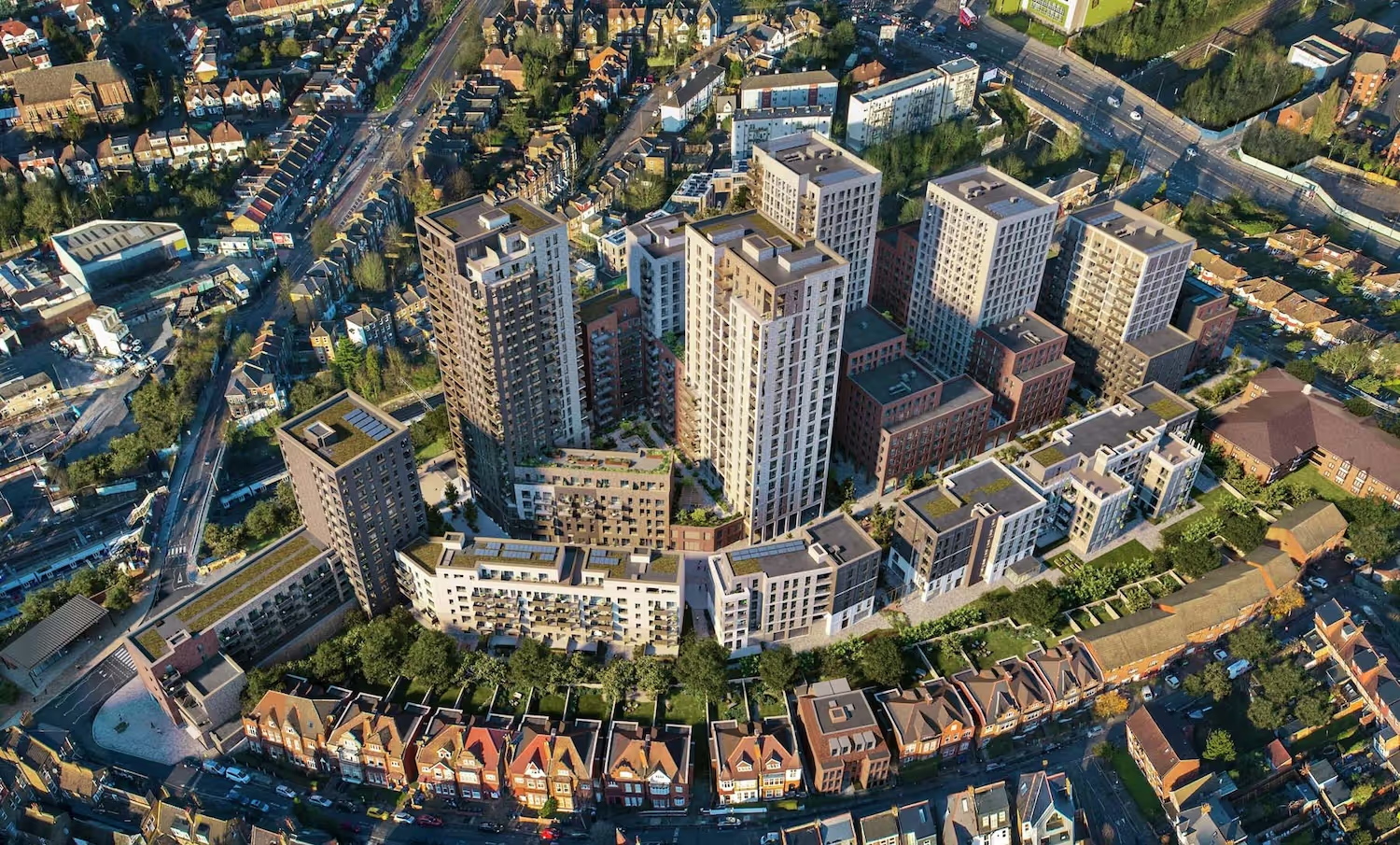
Yes, you can still act on your right to light while the building next door is going up, and mid-construction is often the strongest moment you will ever have to do it.
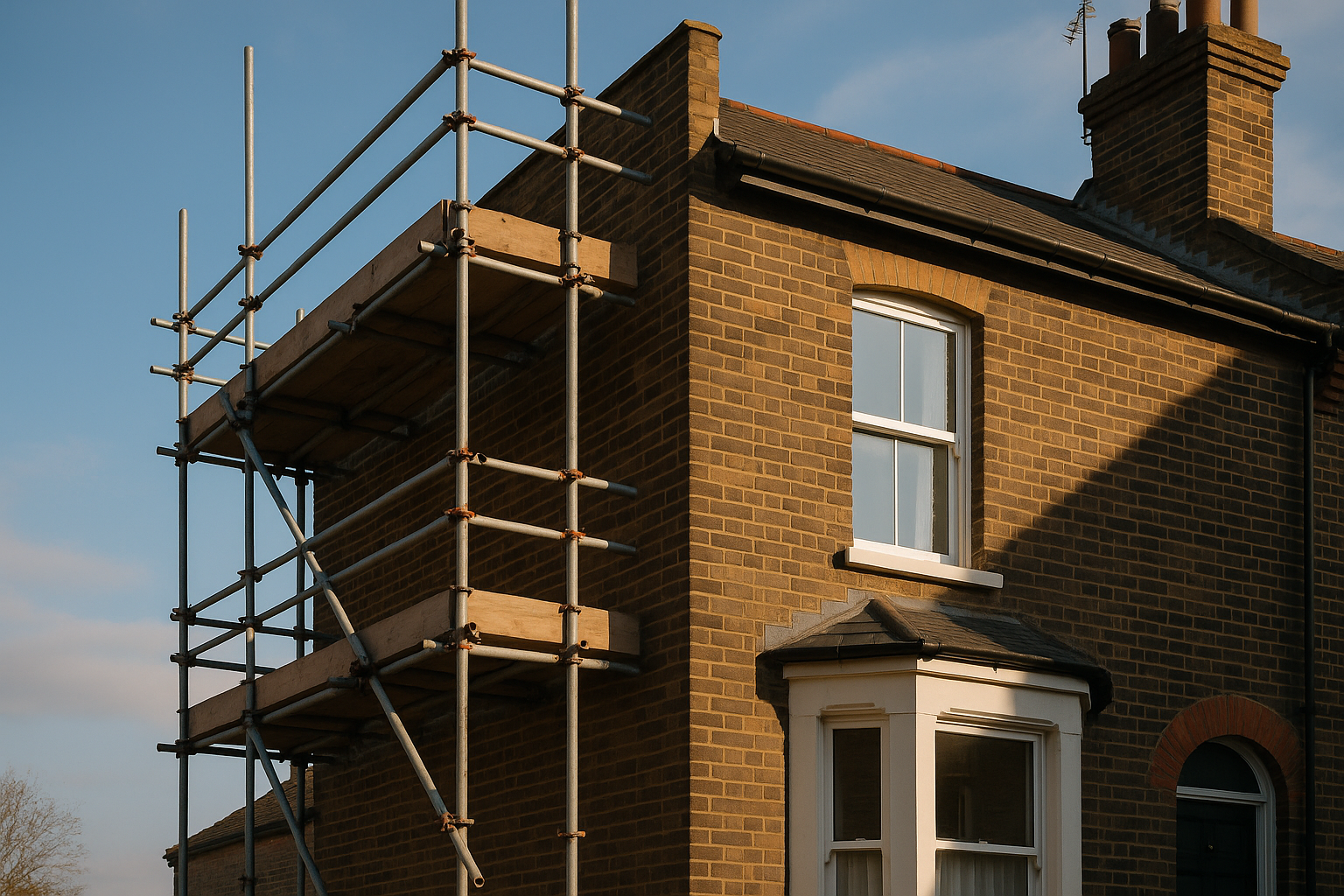
The scaffolding is up. The first floor is framed. From your kitchen you can already see the shape of the thing, and the afternoon light that used to reach the back of the room now stops halfway across the floor. Most people assume they have missed their chance, that once the diggers arrived it was all decided. That instinct is wrong, and acting on it costs owners real money and real remedies every year in England and Wales.
- Your right to light survives even after a build has started.
- Courts weigh what has been built and how you behaved while it went up.
- Acting mid-construction usually gives you more leverage, not less.
Does a right to light disappear once building work starts?
No. A right to light is a private legal easement, and it does not vanish the moment a crane appears over the fence. If your windows have enjoyed daylight without interruption for twenty years or more, the right is very likely already yours under section 3 of the Prescription Act 1832.
The obstruction being physically underway changes nothing about whether the right exists. What it changes is timing. A right that has been earned over decades is not defeated by a developer moving fast.
The mistake owners make is treating construction as a closed door. It is not. It is a window, and a narrowing one, but the door is still open.
Why is mid-construction often your strongest position?
Because the developer has the most to lose while the building is still going up. A steel frame is easier to redesign than a finished, tenanted block. A floor not yet poured is cheaper to lower than one holding a marketing suite full of buyers.
This is the practical heart of the matter. A right to light is only worth what you can enforce, and enforcement bites hardest when the other side faces genuine disruption. The developer knows that a claimant who moves during the build can threaten the programme, the funding and the completion date all at once.
The question is never just whether you have a right. It is what that right can do to the other side's timetable.
Once the building is finished and occupied, the calculus shifts. The court can still act, but it becomes far more reluctant to order anything that pulls a completed structure apart. That reluctance is money out of your pocket, because it softens the pressure that drives a real settlement.
What does the court actually consider while the build is ongoing?
The court looks at two things above all: how serious the loss of light is, and how you behaved once you knew the building was going up. Both matter, and the second one is where owners undo themselves.
On the seriousness of the loss, the measure is technical. A surveyor runs a rights of light analysis using the Waldram method, checking how much of each room still receives adequate sky light. The rough working benchmark is the 50/50 rule, that a room is adequately lit if half its area still receives light at the level of the 0.2% sky factor. Fall below that, and the injury is likely actionable. The starting point for what counts as enough was set long ago in Colls v Home and Colonial Stores Ltd.
On your conduct, the leading case is Coventry v Lawrence, which reset how courts choose between an injunction and damages. Delay counts against you. Silence counts against you. If you watch the whole thing go up and say nothing, you invite the court to conclude that money will do, and you weaken your own hand.
What delay costs you: the lesson from the case law
Delay narrows your remedies. That is not a sales line, it is the pattern that runs through the decided cases.
In HKRUK II (CHC) Ltd v Heaney, the court ordered a developer to cut back the top floors of a completed office building. The claimant had held their ground. That outcome is the exception precisely because most owners hesitate until it is too late to demand it.
Compare that with the reality most face. Once a building is up and let, courts lean towards damages rather than demolition, applying the test that traces back to Ottercroft Ltd v Scandia Care Ltd, where a developer's poor conduct helped justify an injunction even over a modest obstruction. The thread is consistent. Move early and behave reasonably, and the full range of remedies stays open. Sit on your hands, and you argue about a cheque.
What should you do while the work is still going up?
Act now, in order, and do not wait for completion. First, get the shape of the loss measured properly. A rights of light analysis will tell you whether your injury crosses the actionable line or sits in de minimis territory where a court will not intervene. This is where honesty matters: not every reduction in light is a claim, and a good analysis will tell you plainly if yours is not.
Second, put the developer on notice that you are aware and taking advice. This is not about firing off an aggressive letter. A survey and a solicitor's letter with nothing funded behind them rarely move a serious developer, as we explain in our piece on why evidence alone is not enough. What moves them is credible, funded litigation capability.
Third, understand the choice ahead of you, because injunction or payout is the real fork in the road, and your position in it is strongest before the building tops out. If you are unsure whether your situation even qualifies, our guide on when a claim is not worth pursuing sets out the honest boundaries.
Common questions
Can the building be cut back after it is finished?
Sometimes, but rarely. Heaney shows a court will order it in the right circumstances, yet completed and occupied buildings make judges cautious. The safer route to a strong remedy is to act before the structure is complete, when a redesign is still cheap for the developer.
Does the developer having planning permission mean I have no claim?
No. Planning permission and private rights of light are separate systems. A local authority can grant permission while your easement remains fully intact. Permission never extinguishes a right to light; only specific legal mechanisms can do that.
What if the scaffolding is only temporary?
Temporary obstruction from scaffolding alone is usually not the basis of a claim, because the right protects against the permanent structure that will remain. But scaffolding is your early warning. It is the moment to get measured, not the moment to wait and see.
Here is the short version. The build being underway is not the end of your options, it is often the peak of them. The light reaching your rooms today is being decided by choices happening on that site right now, and the earlier you understand where you stand, the more the outcome bends your way. A finished building narrows everything. An unfinished one keeps every door open.
This article is general information about the law in England and Wales, not legal advice. Outcomes always depend on the facts.
Joshua Platt BSc (Hons) MRICS, Director, Daylight Protect
Daylight Protect is a fully funded rights of light claims business operating across England and Wales. We fund everything end to end, the surveyor, the solicitor, counsel and court fees, backed by legal insurance that covers the developer's costs if a claim fails, and we are paid only out of a successful settlement. We tell you when you have a claim, and just as plainly when you do not. Start a claim.
Similar insights