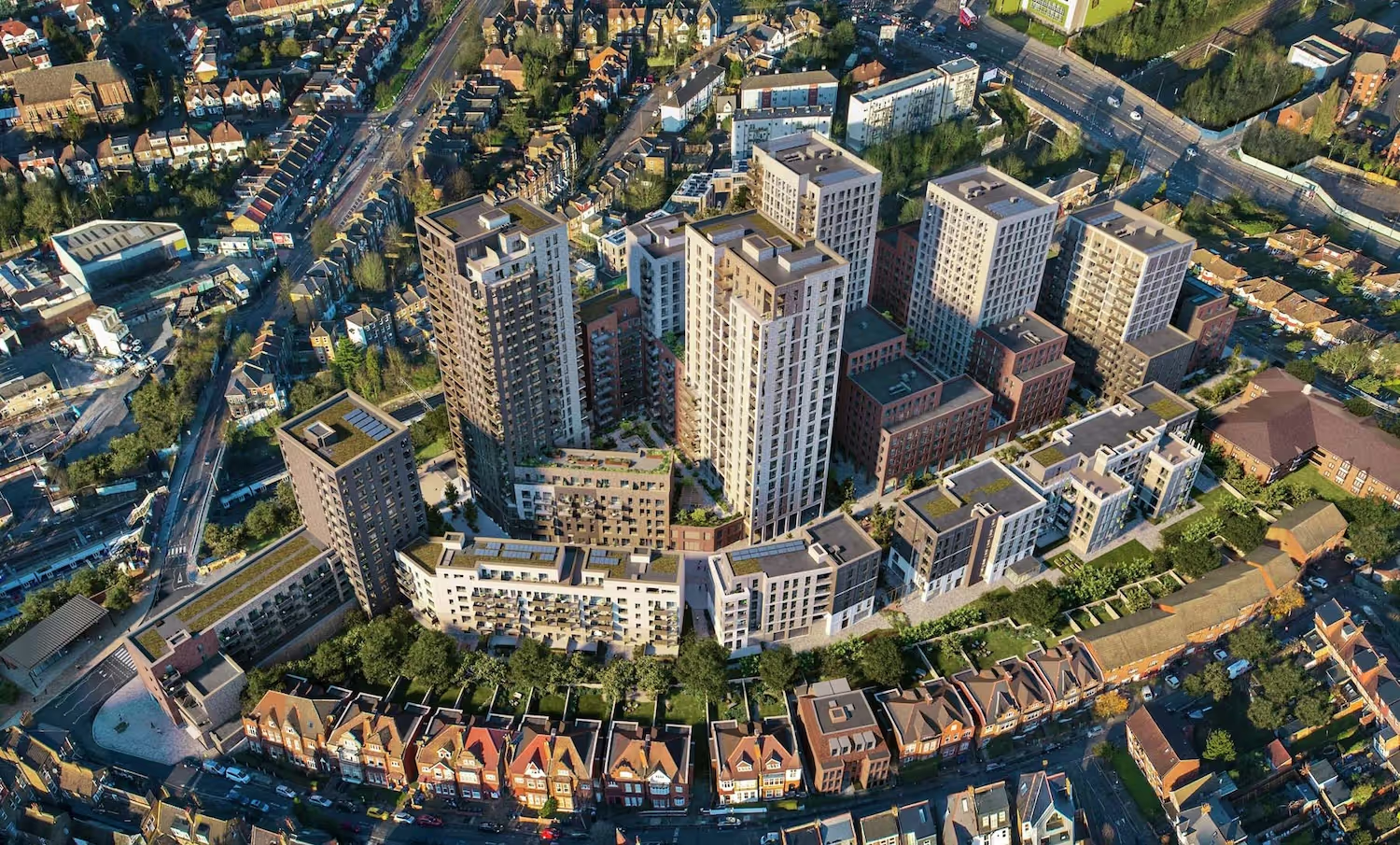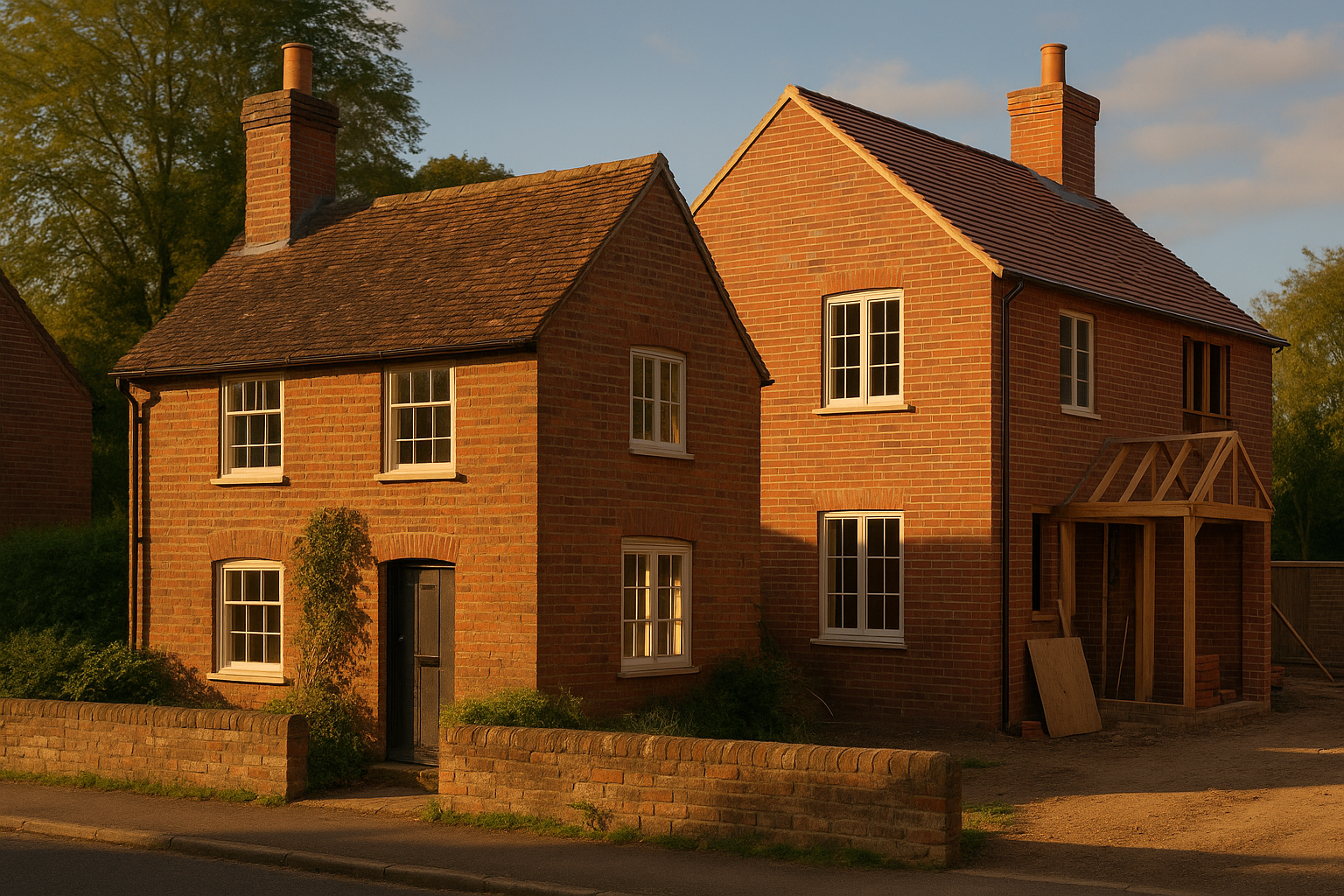
Your right to light is not stronger because you live in a conservation area, and it is not weaker because the building next door is listed. The two systems run on completely separate tracks.
This trips people up constantly. You bought a Victorian terrace inside a conservation area, or you own a Grade II listed cottage, and you assume that heritage protection wraps a shield around your daylight too. It doesn't. Heritage controls sit in planning law. Your right to light sits in private property law. When a developer next door blocks your windows, the question that decides whether you have a claim has nothing to do with the conservation area boundary on the local map.
- Right to light is a private easement, separate from all heritage designations.
- Conservation area and listed status control what gets built, not your light.
- A refused or restricted planning permission does not create a light claim.
Why does conservation area status feel like it should protect your light?
Because both things are about keeping an area the way it is, so people assume they overlap. They don't.
A conservation area is a planning designation under the Town and Country Planning Act 1990. It gives the local authority extra control over demolition, alterations and the character of an area. The council can refuse a scheme that would harm that character, and it can attach tighter conditions. That is real power, but it is planning power. It is about the public interest in how a place looks and functions.
Your right to light is different in kind. It is a private easement, usually acquired under the Prescription Act 1832 after a window has enjoyed light across a neighbour's land for twenty years without interruption. It belongs to you and your property. The council is not a party to it. A planning officer cannot grant it, refuse it, or take it away.
So you can sit inside a strictly controlled conservation area and still lose a right to light claim, and you can sit on an ordinary suburban street with no designation at all and have a rock-solid one. The map that matters is the twenty-year history of light to your windows, not the heritage boundary.
Does a listed building next door make a difference?
It changes what your neighbour is allowed to build, but not whether you have a claim against them when they do build.
Listed building consent is a separate approval on top of planning permission. If the building next door is listed, the developer needs consent for works that affect its special character, and that process can slow a scheme down or shrink it. That may indirectly help your light, because a smaller extension casts a smaller shadow. But that is a side effect, not a legal right you can enforce.
The reverse also matters. If your own home is listed, that does not weaken your right to light one bit. Some owners of listed properties worry that heritage rules somehow limit what they can claim. They do not. The easement attaches to the light reaching your windows, and the listing of your walls is irrelevant to that.
The one practical wrinkle is remedy. Where a neighbouring building is listed and has already been built too high, a court weighing whether to order a cutback under the Shelfer test will factor in the difficulty and cost of altering a protected structure. That does not defeat your claim. It feeds into the balance the court strikes when it decides between an injunction and damages, a balance the Supreme Court reshaped in Coventry v Lawrence.
What actually decides your claim in a heritage setting?
The same things that decide any right to light claim, anywhere in England and Wales.
First, whether you have acquired the right at all. Twenty years of uninterrupted light under the Prescription Act 1832, or an express or implied grant in your title. Age helps you here. Older streets and long-standing terraces, exactly the sort you find in conservation areas, tend to have windows that have enjoyed light for well over the qualifying period. So conservation areas often contain strong claims, not because of the designation, but because the buildings are old.
Second, whether the loss is more than trivial. Surveyors test this with a rights of light analysis, measuring how much of each room falls below the adequately lit threshold using the 50/50 rule and the 0.2% sky factor. If a room drops from well lit to substantially dark, you have an actionable injury. Our piece on what the 50/50 rule and the sky factor really mean walks through this in plain terms.
Third, whether anything in your title or your neighbour's kills the claim before it starts. Consent clauses, a Light Obstruction Notice registered against your light, or unity of ownership at some point in the past. None of these have anything to do with heritage status. They are the real reasons claims fail.
Notice what is missing from that list. The conservation area. The listing. They shape the planning application, not the private claim.
The trap: assuming a planning objection protects your light
If the council can refuse the scheme, why do I need a light claim at all?
This is where conservation area residents lose ground. They pour their energy into objecting to the planning application on heritage grounds, win a smaller scheme or a refusal, and assume their light is handled. Then the developer resubmits, gets permission for a slightly reduced building, and the objectors have no private remedy left because they never asserted their easement.
Planning permission and your right to light are independent. A developer can hold a valid permission and still be liable to you for obstructing your light, because permission is not a licence to interfere with a private easement. We set this out fully in our explainer on whether planning permission overrides a right to light. The short version: winning the planning fight does not settle the private one, and losing the planning fight does not lose it either.
The stronger position is to run both. Object on planning and heritage grounds if you have them, and separately protect your easement. The two are not alternatives. Timing matters here too, because your leverage is strongest before the development completes. Once the building is up, a court is far more reluctant to order it cut back, particularly where the structure is listed and the works would damage protected fabric.
What about Section 203?
This is the one route where heritage and light genuinely intersect, and it usually cuts against the owner.
Where a local authority or another qualifying body is involved in a development, Section 203 of the Housing and Planning Act 2016 can override private rights of light and convert them into a right to compensation instead of an injunction. Regeneration schemes, including those in historic town centres, sometimes use this power. If Section 203 applies, your easement does not vanish, but your remedy narrows to money.
You can read the provision itself on legislation.gov.uk, and our fuller treatment sits in the article on whether developers can override your right to light. It does not apply to an ordinary private developer building next to you, which covers most neighbour disputes.
Common questions
Does living in a conservation area give me a stronger right to light?
No. The designation controls planning and demolition, not private easements. Your right to light depends on twenty years of uninterrupted light under the Prescription Act 1832 or a grant in your title. Conservation areas often contain strong claims simply because the buildings are old, not because of the status itself.
Can I stop a neighbour's extension using heritage rules alone?
You can object to the planning application on heritage grounds, and the council may refuse or shrink the scheme. But that is a planning outcome, not a private remedy. If the extension still blocks your light once built, you need to assert your easement separately to recover an injunction or compensation.
My house is listed. Does that limit my light claim?
Not at all. The listing protects your building's fabric under planning law and has no effect on the light reaching your windows. Your right to light is measured and enforced exactly as it would be for any unlisted property.
What to do if you are in this position
Start by separating the two questions in your head. One is planning: what can the council control about the scheme next door. The other is private: do you hold a right to light, and is it being injured. They travel on different tracks and you can pursue both at once.
Get a rights of light analysis done on your actual windows before the building goes up. That tells you whether the injury is real and more than trivial, which is the fact that decides everything. A heritage objection, however well argued, does not answer that question.
And move while you still have leverage. Positions are strongest before a development completes, and delay narrows the remedies a court will consider, a point the case law makes plain. If a letter has already arrived or scaffolding is going up, the clock is running whether your street is a conservation area or not.
This article is general information about the law in England and Wales, not legal advice. Outcomes always depend on the facts.
Joshua Platt BSc (Hons) MRICS, Director, Daylight Protect
Daylight Protect is a rights of light claims specialist operating across England and Wales. We provide a fully funded solution that covers everything end to end, the surveyor, the solicitor, counsel and court fees, backed by legal insurance that covers the developer's costs if a claim does not succeed. There is no recovery, no fee, and no costs to you either way. We tell you plainly when you have a claim, and just as plainly when you do not.
Similar insights