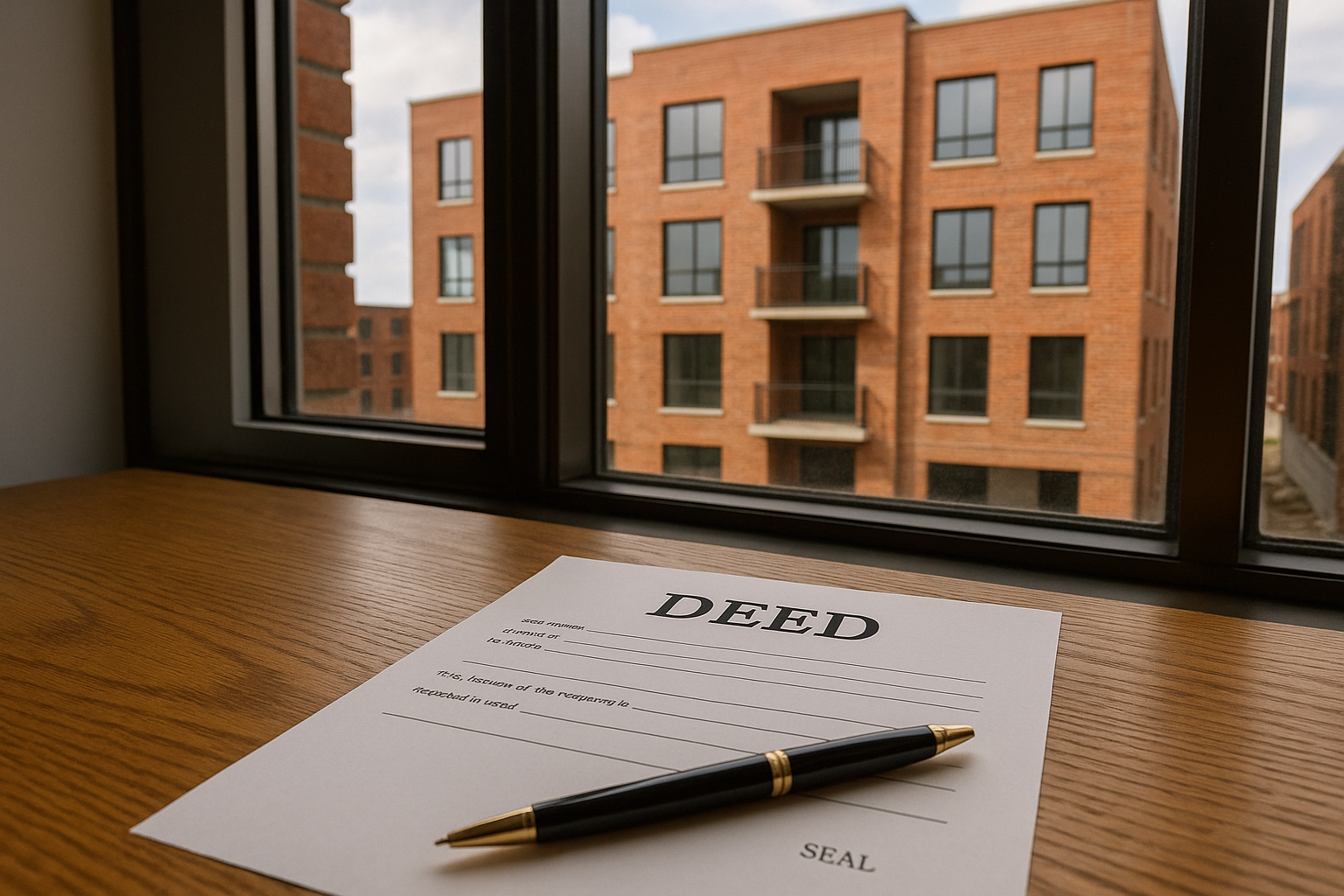
A deed of release is the legal document that permanently gives up your right to light in exchange for a payment, and once you sign it, that right is gone for good.
It usually arrives near the end of a negotiation, often with a covering letter urging you to sign quickly so the money can be paid. That pressure is deliberate. The developer wants certainty, and a signed deed is the certainty they are buying. You are entitled to understand every line of what you are handing over before your name goes on it, because a deed of release is not a receipt for compensation. It is the surrender of a property right that took years to acquire.
The key points:
- A deed of release permanently extinguishes your easement of light, not just the current dispute.
- The wording decides whether you keep any protection against future development.
- The figure and the drafting are both negotiable until you sign.
What is a deed of release?
A deed of release is a formal written agreement that removes a legal right, executed with the extra formality the law requires for deeds. In a rights of light matter, it is the mechanism by which you agree to let a development interfere with your light, and in return you receive an agreed sum.
Your right to light is a private easement. Most owners acquire it by twenty years of uninterrupted enjoyment under section 3 of the Prescription Act 1832, though some rights pass with the land under section 62 of the Law of Property Act 1925. However you got it, it attaches to your building and it is enforceable against a neighbour whose scheme cuts your light below the level the law protects.
A deed of release takes that easement away. Not for a year. Not for this planning application. Permanently, and against future owners of both properties, unless the drafting says otherwise.
What exactly are you giving up when you sign?
You are giving up the leverage that made the payment possible in the first place. That is the honest way to think about it.
The value in a rights of light claim comes from a court's power to grant an injunction. Since Coventry v Lawrence [2014] UKSC 13 the courts have kept that power firmly on the table, and cases like HKRUK II (CHC) Ltd v Heaney [2010] EWHC 2245 (Ch) show a judge willing to order part of a finished building cut back. A developer settles because that risk is real and expensive. Once you release the easement, the risk vanishes. There is nothing left to enforce.
So the question is not simply how much money is on offer. It is what the deed says you are releasing. A well-drafted deed for the owner narrows the release to the specific scheme described in the approved drawings. A deed drafted purely for the developer may release your light against any future development on that land, which means the next scheme, and the one after that, cost you nothing and gain you nothing.
Read the definition of the development. Read whether the release is tied to the drawings. That single distinction can be worth more than the headline figure.
Is the wording of a deed of release negotiable?
Yes. Every clause is negotiable right up to the moment you sign, and the first draft you receive is written to protect the party who sent it.
Common points worth pushing on. The scope of the release, so it covers only the consented scheme and not open-ended future works. A plan or drawing reference attached to the deed, fixing what you have actually agreed to. A clause confirming the payment is made before or on completion, not at some vague later date. Wording on how the sum is treated, which can matter for tax depending on your circumstances.
There is also the question of costs. In a properly funded claim the developer's reasonable costs of the deed are part of the settlement, not something you fund from your compensation. If a letter suggests you should pay to have your own release drafted, that is a signal the operation writing to you is not funding the matter the way a genuine specialist would.
The difference between a release and a settlement figure
People treat the number and the deed as the same thing. They are not, and confusing them is where owners lose out.
The settlement figure is the outcome of a valuation. It sits somewhere on a spectrum between the modest book value of the light lost and the much larger negotiating damages a court might award as the price of releasing an injunction, the approach seen in cases such as Tamares (Vincent Square) Ltd v Fairpoint Properties [2007] EWHC 212 (Ch). Where you land on that spectrum depends on the strength of your claim and the credibility of the threat behind it.
The deed of release is the paperwork that delivers that outcome. A strong figure inside a badly drafted deed can still leave you exposed. A fair figure inside a tight deed closes the matter cleanly. Both have to be right. If you have not yet worked out where a fair number sits, our explanation of how rights of light compensation is really calculated sets out the valuation spectrum in plain terms.
What happens to the deed if you move house?
A deed of release runs with the land, so it binds whoever owns your property next. If you release your light and later sell, the buyer takes the house with no claim against the neighbouring development.
That cuts both ways during a live matter. If you are mid-claim and thinking of selling, the unresolved claim is an asset that needs handling with care, because a buyer and their solicitor will want to know exactly where it stands. Getting the timing and the drafting right protects the value for you rather than gifting it to whoever buys next.
Common questions
Can I change my mind after signing a deed of release?
Realistically, no. A deed is designed to be final, and once it is executed and the development proceeds in reliance on it, you cannot revive the right you gave up. This is precisely why the review before signing matters so much. There is no cooling-off period for property easements.
Do I need my own solicitor to review a deed of release?
You should never sign one on the strength of the sender's assurance alone. In a fully funded claim, specialist solicitors act for you and the drafting is scrutinised on your behalf as part of the service. If you are being asked to arrange and pay for your own review, question how the matter is really being funded.
Is the payment under a deed of release taxable?
It depends on your circumstances, including whether the property is your main home. The treatment of rights of light payments is not one-size-fits-all, and our guide on tax on rights of light compensation walks through the main scenarios. Take advice on your own position before you assume the sum is tax free.
Before you sign anything
Slow down. A deed of release is the one moment in the whole process that cannot be undone, and the pressure to sign quickly is almost always the developer's need for certainty, not yours.
Three things, in order. First, understand that you are releasing an easement permanently, not settling a single dispute. Second, check the release is tied to the specific consented scheme, not to any future development. Third, make sure the figure and the drafting are both handled by people acting for you, funded so that the cost does not come out of your pocket. If a letter urges you to sign before you have done any of that, treat the urgency as information about the sender.
If a proposal has already reached the deed stage, it means someone believes your light has value worth paying for. That is the point to get proper eyes on it. You can start your claim assessment and have the position checked before you commit to anything.
This article is general information about the law in England and Wales, not legal advice. Outcomes always depend on the facts.
Joshua Platt BSc (Hons) MRICS, Director, Daylight Protect
Daylight Protect is a rights of light claims specialist operating across England and Wales. We provide a fully funded solution that covers everything end to end, the surveyor, the solicitor, counsel and court fees, backed by legal insurance that covers the developer's costs if a claim does not succeed. There is no recovery, no fee, and no costs to you either way. We tell you plainly when you have a claim, and just as plainly when you do not.
Similar insights