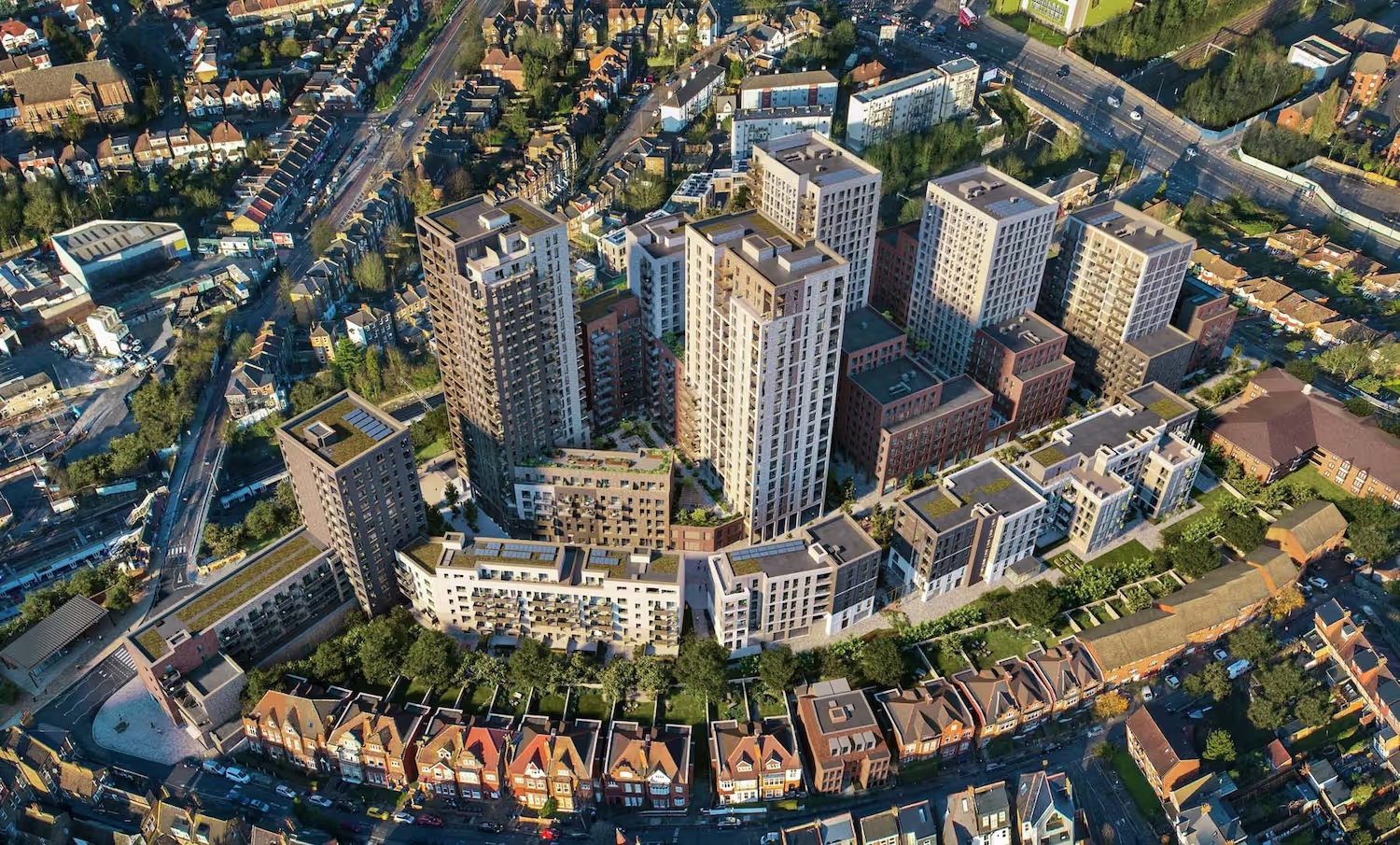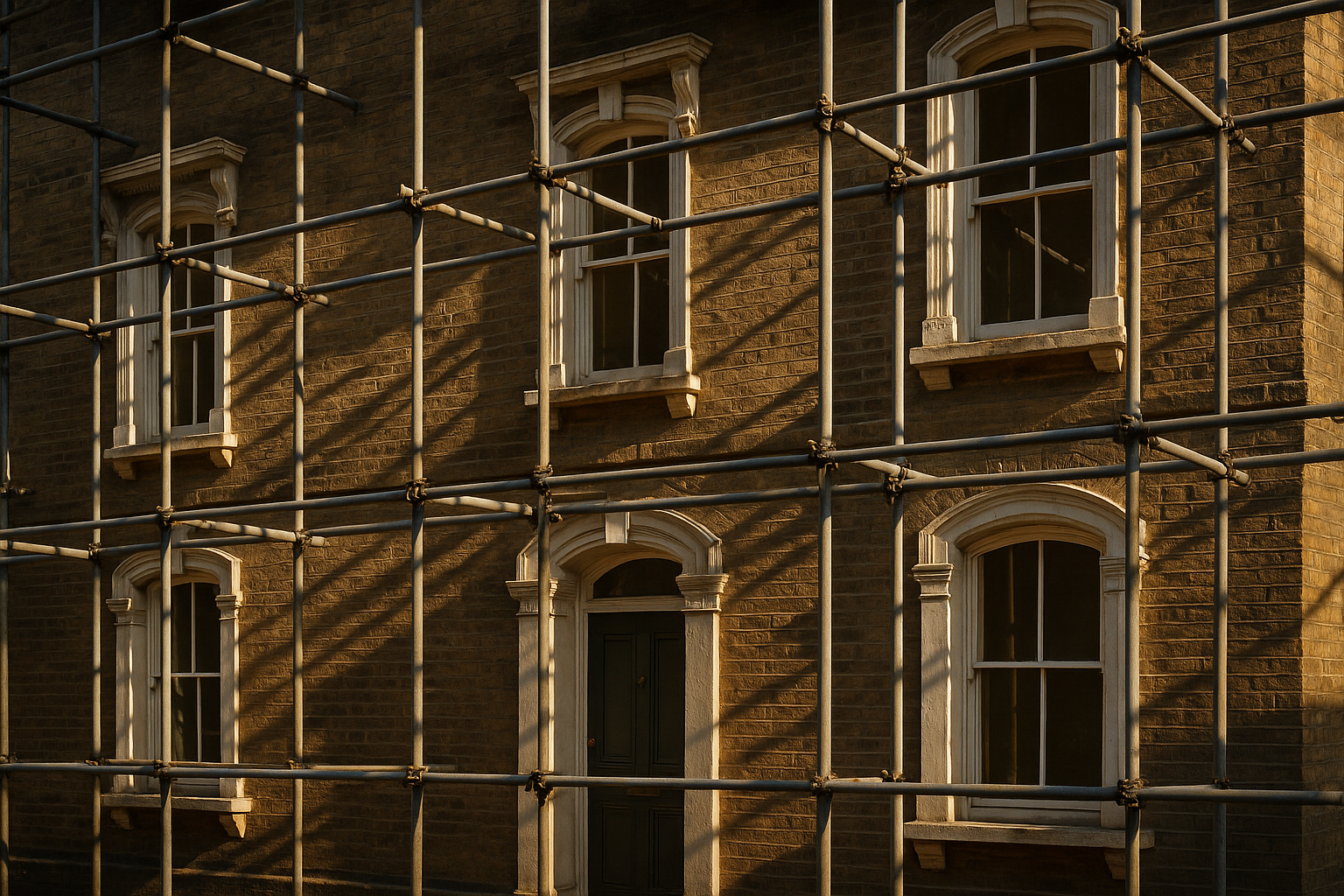
Scaffolding blocking your window is almost never the thing you can claim for. The temporary structure that has gone up next door is a nuisance, but a rights of light claim turns on the permanent building rising behind it, not the poles and boards that help put it there.
You come downstairs and the kitchen is darker than it was yesterday. A metal frame has appeared across the boundary, wrapped in mesh, and your window now looks out onto scaffold boards instead of sky. It feels like an injury worth acting on. The instinct is right, but the target is usually wrong. The scaffolding will come down. The structure it serves may not, and that is where your attention belongs.
This article covers:
- Why temporary obstructions rarely found a claim on their own
- What the scaffolding is actually telling you
- When to act, and why waiting costs you
Does scaffolding itself breach your right to light?
On its own, scaffolding is a weak basis for a rights of light claim. A right to light under the Prescription Act 1832 protects the light that reaches your windows across a neighbouring piece of land, built up over twenty years of uninterrupted enjoyment. It is a right against a lasting obstruction, not against a passing one.
Scaffolding is, by design, temporary. It exists to let a building go up or come down, then it is dismantled. A court weighing an injunction looks at the substance of what is being done to your light over time. A frame that will be gone in six months does not usually meet that bar, because the law is not much interested in interruptions that resolve themselves.
That does not make scaffolding irrelevant. It makes it a symptom rather than the disease.
What is the scaffolding actually telling you?
The scaffolding is a signal. Someone next door is building, and the permanent structure behind the mesh is the thing that will take your light for good.
Work out what is being built. A roof extension, an extra storey, a rear addition that pushes towards your boundary: these are permanent obstructions, and they are exactly what a rights of light analysis measures. If the completed building will cut the light to your rooms below the level the law treats as adequate, you may have a claim worth the name. The test is whether enough of the room is left with enough light, assessed through a Waldram diagram and the long-standing 50/50 convention we explain in our piece on the 50/50 rule and the 0.2% sky factor.
So the useful question is not "can I stop the scaffolding". It is "what is the scaffolding here to build, and what will that building do to my light once it stands".
When does a temporary obstruction become actionable?
A temporary obstruction can edge towards actionable when it is substantial, prolonged, and interferes with your reasonable use of your property beyond the ordinary give and take of neighbouring works. That is the territory of general nuisance, which sits apart from the easement of light.
If scaffolding overhangs your land or oversails your airspace without agreement, that can be a trespass, and a different remedy altogether. If works drag on far longer than they should and the obstruction becomes effectively semi-permanent, the picture shifts again. These are real issues, but they are usually resolved through the law of nuisance and property rights, not a rights of light claim.
There is also the Party Wall etc. Act 1996 to keep in view. It does not create a right to light, but it governs how certain neighbouring works are carried out, including access and notice, and it can give you a say in how and when the scaffolding goes up where the work touches a shared wall or boundary.
Why waiting for the scaffolding to settle the matter is a mistake
Waiting is the costliest thing you can do. The strongest position in a rights of light matter exists before the building is finished, not after.
Timing is not a sales point. It is how the remedies work. A court deciding whether to order a building cut back, rather than award money, weighs how the claimant behaved. Delay, standing by while bricks go up, watching the structure complete without protest, all of it narrows what a court will later consider. The leading warning on this is the Heaney litigation, which we unpack in our article on what Heaney teaches about delay. The claimant there recovered, but the case is a lesson in how close delay runs to losing the strongest remedy.
So the scaffolding, far from being the problem, is your early warning. It appears before the obstruction is permanent. That is the window in which a credible position carries the most weight, because the developer still has decisions to make and a court still has the full range of remedies open to it.
How compensation reflects the permanent loss, not the temporary one
Compensation for lost light is built on the permanent injury to your property, not the inconvenience of the works. Where a court declines an injunction and awards damages instead, it looks at the enduring reduction in light and, increasingly, at a fair share of the profit the development gains from obstructing you.
That negotiating-damages approach was set out clearly in Tamares v Fairpoint, where the court worked from the value the developer extracted by building over the claimant's light. It is the permanent structure that generates that value, which is another reason the scaffolding is beside the point. We go further into how figures are actually reached in our piece on how rights of light compensation is really calculated.
Common questions
Can I force my neighbour to take scaffolding down?
Not usually on right to light grounds alone, because a temporary structure rarely meets the test for an actionable obstruction of light. If the scaffolding trespasses onto your land or oversails your airspace, or the works breach the Party Wall etc. Act 1996, you may have separate remedies. The permanent building behind it is the question that matters most.
Should I wait until the building is finished to act?
No. Acting before completion keeps every remedy open, including the possibility of the structure being cut back. Delay narrows what a court will consider and weakens your leverage. The appearance of scaffolding is a prompt to assess your position, not a reason to wait and see.
How do I know if the finished building will actually harm my light?
Only a proper rights of light analysis can tell you, by modelling the completed structure against the light reaching your rooms. This is not a Daylight and Sunlight planning assessment, which measures something different. It is a legal measurement of your private easement, and it is the first real step in testing whether you have a claim.
What to do while the scaffolding is up
Treat the frame as a starting gun, not a grievance in itself. Find out what is being built next door, from the planning records or the developer directly. Note when the scaffolding went up and keep a simple record of how your light has changed. Then get the permanent structure assessed properly, before it completes, while your position is at its strongest.
That is the difference between reacting to the poles outside your window and acting on the building behind them. One passes. The other stays.
This article is general information about the law in England and Wales, not legal advice. Outcomes always depend on the facts.
Joshua Platt BSc (Hons) MRICS, Director, Daylight Protect
Daylight Protect is a rights of light claims specialist operating across England and Wales. We provide a fully funded solution that covers everything end to end, the surveyor, the solicitor, counsel and court fees, backed by legal insurance that covers the developer's costs if a claim does not succeed. There is no recovery, no fee, and no costs to you either way. We tell you plainly when you have a claim, and just as plainly when you do not.
Similar insights