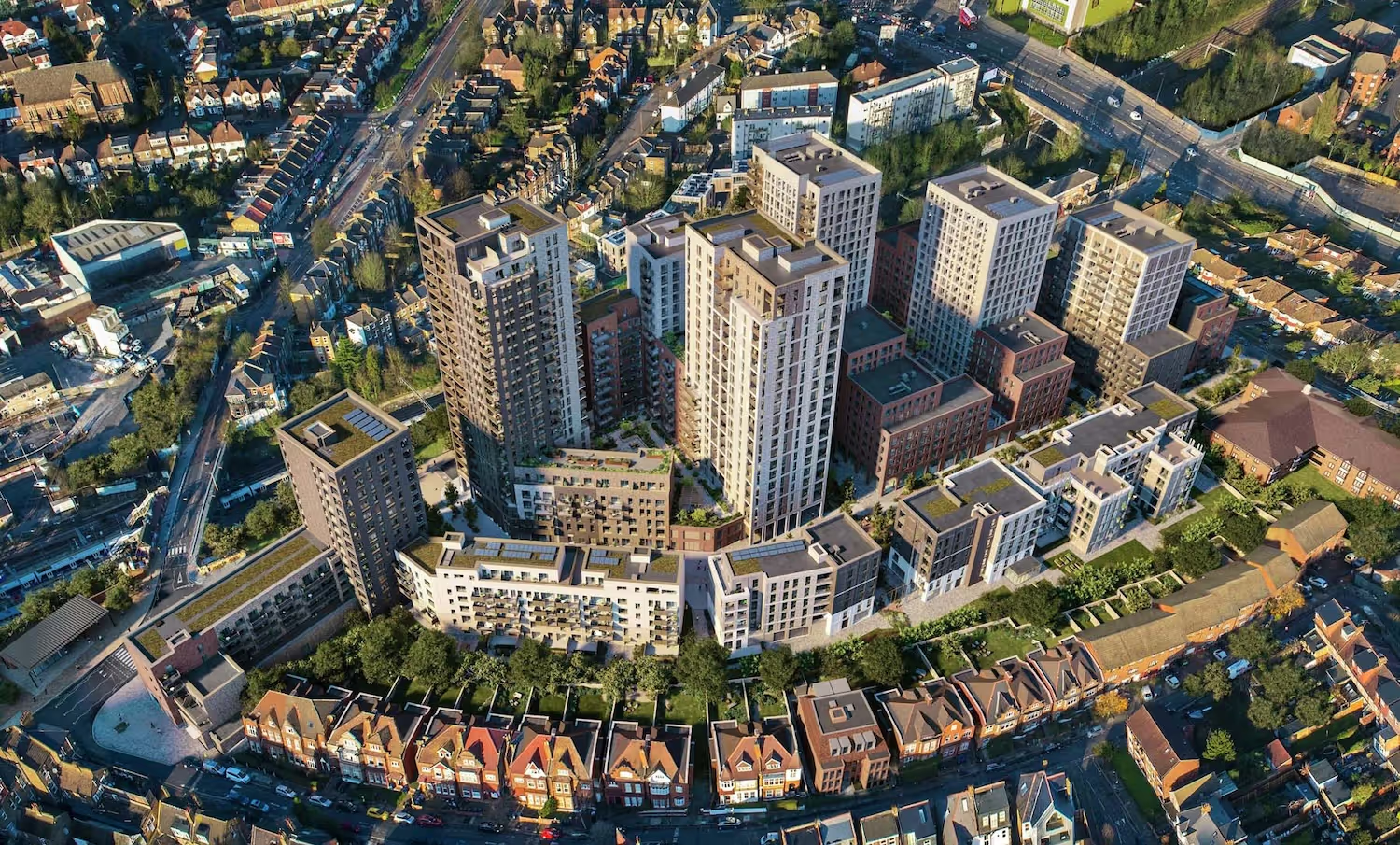
Most windows in England and Wales get their right to light the quiet way, through the simple passage of time. Twenty years of light coming through a defined opening, uninterrupted, and the law treats that light as yours. The statute that does this is the Prescription Act 1832, and almost nobody who benefits from it has ever heard its name.
You did not apply for it. You were not told about it when you bought the house. One day a developer next door drew up plans, and the right was simply there, waiting, built into the brick of a Victorian terrace that predates everyone involved. That is how the Prescription Act 1832 works, and it is worth understanding before anyone starts building near your windows.
This article covers:
- How 20 years of light becomes a legal right
- What stops the clock, and what does not
- Why the date on your deeds often does not matter
How does 20 years of light become a legal right?
The right to light under the Prescription Act 1832 is acquired by use, not by paperwork. Section 3 of the Act is the operative part. It says that where light has been enjoyed through a defined aperture for a full 20 years without interruption, the right becomes absolute and indefeasible, unless the light was enjoyed by written consent.
Read that again, because it is doing more than it looks. A "defined aperture" means a window, a glazed door, a rooflight, any fixed opening that admits light to a room. "Enjoyed" simply means the light came in and was used. You did not have to do anything active. Living in the house was enough.
So the right attaches to the opening, not to you as a person. It is a private legal easement, the same category of right as a right of way across a neighbour's land. Once it has matured over 20 years, it runs with the property. Sell the house and the right passes to the buyer, as we explain in our piece on how rights of light transfer when a property is sold.
The 20-year clock counts backwards, not forwards
Here is the part that catches people out. The 20 years under the Prescription Act is measured as the period immediately before the right is challenged or a claim is brought. It is a rolling window, not a fixed birthday.
Say a developer serves proceedings, or you bring a claim, in 2026. The court looks back at the 20 years ending at that point, running roughly from 2006. If the light came in uninterrupted across that period, the right is made out. You do not need to prove light in 1950 or 1980. You need the most recent 20 years.
This is also why a brand new window cannot carry a prescriptive right yet. Knock a new opening into a wall this year and it starts its own clock from zero. The old wall next to it might have a right going back a century, but the new aperture is a stranger to the easement. That distinction matters when people alter their windows, which we cover in whether a right can be lost through abandonment or altered windows.
What actually stops the clock?
Three things interrupt the 20-year period, and only three, and each works differently.
The first is physical obstruction. If something blocks the light for a continuous year, the enjoyment is interrupted. But here the Act is stricter than it sounds. Section 4 says an interruption only counts if it was submitted to or acquiesced in for a full year after you knew about it and knew who caused it. Put a fence up for eleven months and take it down, and the clock keeps running. Scaffolding and short-lived blockages rarely break the chain, a point we unpack in our note on temporary obstructions and your light.
The second is written consent. If the light was enjoyed under a written agreement or licence, no absolute right accrues, however long the window has existed. Consent in the title is one of the main reasons claims collapse before they begin.
The third is the Light Obstruction Notice, the modern statutory tool that stands in for building a physical wall of light-blocking screening. A neighbour can register a notional obstruction instead of an actual one, and if you do nothing within the year, your prescriptive right can be defeated. If one lands on your desk, read what a Light Obstruction Notice means and what to do before the clock runs out.
Why the age of your house usually settles it
In practice, most disputes never turn on the 20-year calculation at all. The majority of homes with claims are far older than 20 years, with original windows in original walls. A Victorian semi built in 1890, a terrace from the 1930s, a post-war estate house from the 1950s. The light through those windows has been enjoyed for decades beyond the minimum.
That is why, when a developer's solicitor tries to argue the right has not accrued, the argument usually goes nowhere. The building is old, the windows are in the same place they always were, and no one served a notice or obtained consent. The right is made out almost on sight.
The Prescription Act is not the only route to a right to light. Rights can also pass on the sale of part of a property under section 62 of the Law of Property Act 1925, or as an implied grant under the rule in Wheeldon v Burrows. But for the ordinary homeowner facing a new development, prescription is the workhorse. It is how your right came into being without anyone ever mentioning it.
The right exists. Enforcing it is a different question.
Having a prescriptive right is the start, not the finish. A right to light is only worth what you can enforce, and that depends on whether the loss your windows will suffer is real enough to interest a court, and whether you can credibly pursue it.
The measurement comes next: a rights of light analysis using the 50/50 rule and the 0.2% sky factor to test how much light each room will actually lose. A faded old easement that produces a trivial loss gives you little. A genuine, measurable reduction across habitable rooms is what moves a settlement.
That is the honest version. The Prescription Act handed you a right you never asked for. Whether it is worth anything depends on the facts of your rooms, the scale of what is being built, and whether you act while the remedies are still on the table. Delay narrows them, as the courts have made plain.
Common questions
Does my right to light expire if I do not use it?
Not through simple non-use over a short period. But a right can be treated as abandoned if your conduct shows a settled intention to give it up, for example by bricking up a window permanently with no plan to reopen it. Mere disuse for a while is not enough on its own.
Can a developer stop my 20-year right from forming?
Yes, but only by a recognised method: obtaining your written consent, registering a Light Obstruction Notice, or creating an actual obstruction that you then accept for a full year. Each has to be done properly and within the statutory framework. None happens by accident.
I have lived here less than 20 years. Do I still have a right?
Very likely, because the right attaches to the window, not to how long you personally have owned the house. If the opening is older than 20 years and the light has run uninterrupted, the matured right passed to you when you bought. Your own length of ownership is not the measure.
If a development is going up near windows that have been in place for decades, the 20-year question is usually the easy part. The real work is measuring the loss and acting in time. You can start your claim assessment and we will tell you plainly where you stand.
This article is general information about the law in England and Wales, not legal advice. Outcomes always depend on the facts.
Joshua Platt BSc (Hons) MRICS, Director, Daylight Protect
Daylight Protect is a rights of light claims specialist operating across England and Wales. We provide a fully funded solution that covers everything end to end, the surveyor, the solicitor, counsel and court fees, backed by legal insurance that covers the developer's costs if a claim does not succeed. There is no recovery, no fee, and no costs to you either way. We tell you plainly when you have a claim, and just as plainly when you do not.
Similar insights