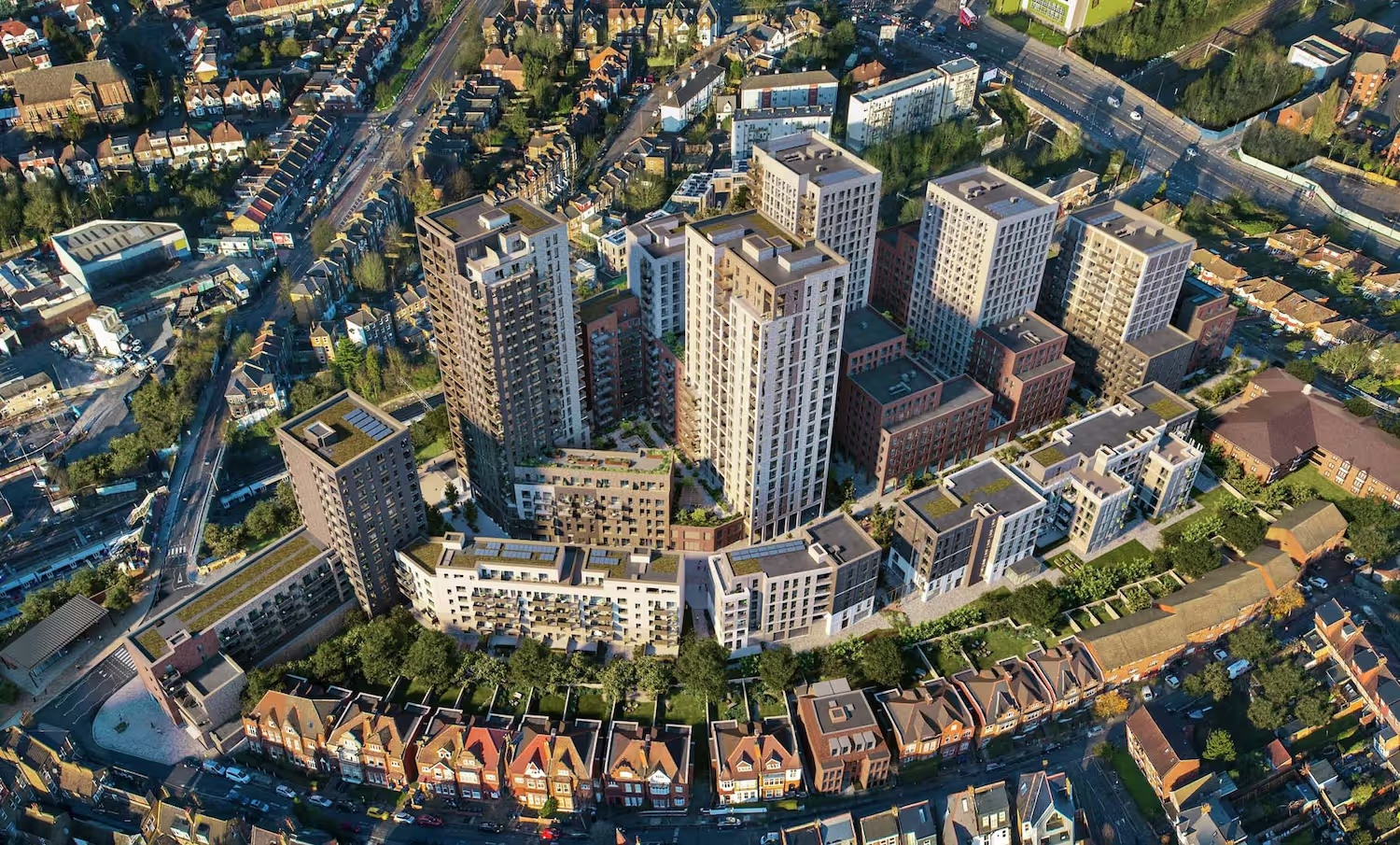
Yes. If a new build next door has cut the light reaching your windows, you may be able to claim compensation from the developer, even if the building had planning permission. You can now get a first answer in about 90 seconds with our free right to light calculator.
Most people never find out. The flats go up, or a neighbour adds a two-storey extension, and the front room that used to catch the morning sun stays grey until lunchtime. You put the big light on, get used to it, and move on. The trouble is that the law may have given you a right to that light, and the developer who took it may owe you for it. Nobody is going to knock on your door and tell you.
This article covers:
- Why a darker room can be worth money
- Why you cannot judge the loss by eye
- How the calculator works, and what to do with the result
Why can a darker room be worth money?
Because the light coming through an established window is a legal right, and a legal right has a value.
In England and Wales, a window that has received light without interruption for 20 years usually acquires a right to keep enough of it. That rule comes from section 3 of the Prescription Act 1832, and it still underpins almost every claim today. The right belongs to the building, not to you personally, which is why it passes to the next owner when a house is sold.
When a development takes too much of that protected light, the owner of the affected window can ask the court to step in. In some cases that means the building is altered or cut back. Far more often it means the developer pays compensation to settle the claim. We explain how that figure is reached in our piece on how right to light compensation is valued.
Does planning permission stop a claim?
No. Planning permission and a right to light are two separate things.
When the council approves a scheme, it is deciding whether the building is acceptable in planning terms. It is not deciding whether the building interferes with your private legal rights. A developer can have full permission and still take light you are entitled to. We go into this in detail in our article on right to light and planning permission.
The same confusion surrounds the so-called 45-degree rule. It is a planning guideline, not the test a court applies, so a building that passes it can still give you a valid claim. Our guide on why the 45-degree rule is not right to light law explains the difference.
Why can't you judge the loss by eye?
Because your eyes adjust far faster than you think, and the legal test is not about how gloomy a room feels.
Surveyors treat a room as adequately lit when more than half of it can still see a patch of sky. What a claim turns on is whether the new building has pushed your room below that line. A room can feel only slightly darker and still have crossed it. Another room can feel much worse and still be on the right side of it.
That is why so many people talk themselves out of a claim they actually have, and why others assume they have one when they do not. Until now, the only way to find out was a conversation with a specialist. The calculator gives you a quick first indication before you pick up the phone.
How does the calculator work?
It asks a handful of plain questions and compares your answers with real claims.
First, it asks about your home: what type of property it is, whether you own it or rent it, roughly how old it is and its postcode. Age matters because a window usually needs 20 years of light before the right exists.
Second, it asks what changed. What stood next door before the new work began, how tall the new building is and how close it stands, and which room feels the difference most.
Third, it gives you your Daylight™ Impact Score and compares your circumstances with similar claims Daylight Protect has pursued to settlement. Leave your details and you can see the full result and ask for a free review by a specialist.
You can try it now on our right to light calculator page.
What does the result actually tell you?
It tells you whether your situation is worth a proper look. It does not tell you what your claim is worth.
The comparison is drawn from claims we have taken on and pursued to settlement. Daylight Protect has represented over 2,000 claimants and recovered millions for them, so the calculator reflects real outcomes rather than guesswork. But every home is different. The real position depends on measurements, the history of the property and the legal detail, and that is what the free review looks at.
The result is an indicative guide only. It is not a valuation, legal advice or a formal rights of light assessment.
Common questions
Does the calculator cost anything?
No. The calculator is free and so is the review that follows. If you do have a claim, we work on a no win, no fee basis, so you pay nothing unless money is recovered for you.
The building is already finished. Is it too late?
Not necessarily. A claim is usually strongest while a building is still going up or soon after it is finished, and waiting for years can weaken your position. Our article on what happens if you wait too long explains why timing matters.
I rent my home. Can I still use it?
Yes. Anyone can complete the calculation. The legal right will usually need to be considered with the owner of the property, and the review will tell you where you stand.
Where this leaves you
If a new build next door has made your home darker, the worst thing you can do is shrug and get used to it. The law may well be on your side, and it costs nothing to find out. Spend 90 seconds on the calculator, or if you would rather speak to someone straight away, you can start your claim assessment and we will tell you plainly whether there is anything worth pursuing.
This article is general information about the law in England and Wales, not legal advice. Outcomes always depend on the facts.
Joshua Platt BSc (Hons) MRICS, Director, Daylight Protect
Daylight Protect is a rights of light claims specialist operating across England and Wales. We provide a fully funded solution that covers everything end to end, the surveyor, the solicitor, counsel and court fees, backed by legal insurance that covers the developer's costs if a claim does not succeed. There is no recovery, no fee, and no costs to you either way. We tell you plainly when you have a claim, and just as plainly when you do not.
Similar insights